Home / Categories / X-Ray Machine Plastic Parts Mould and Moulding Services
X-Ray Machine Plastic Parts Mould and Moulding Services
X-Ray Machine Plastic Parts Mould and Moulding Services | Renovator Appliances Ltd
Product Overview
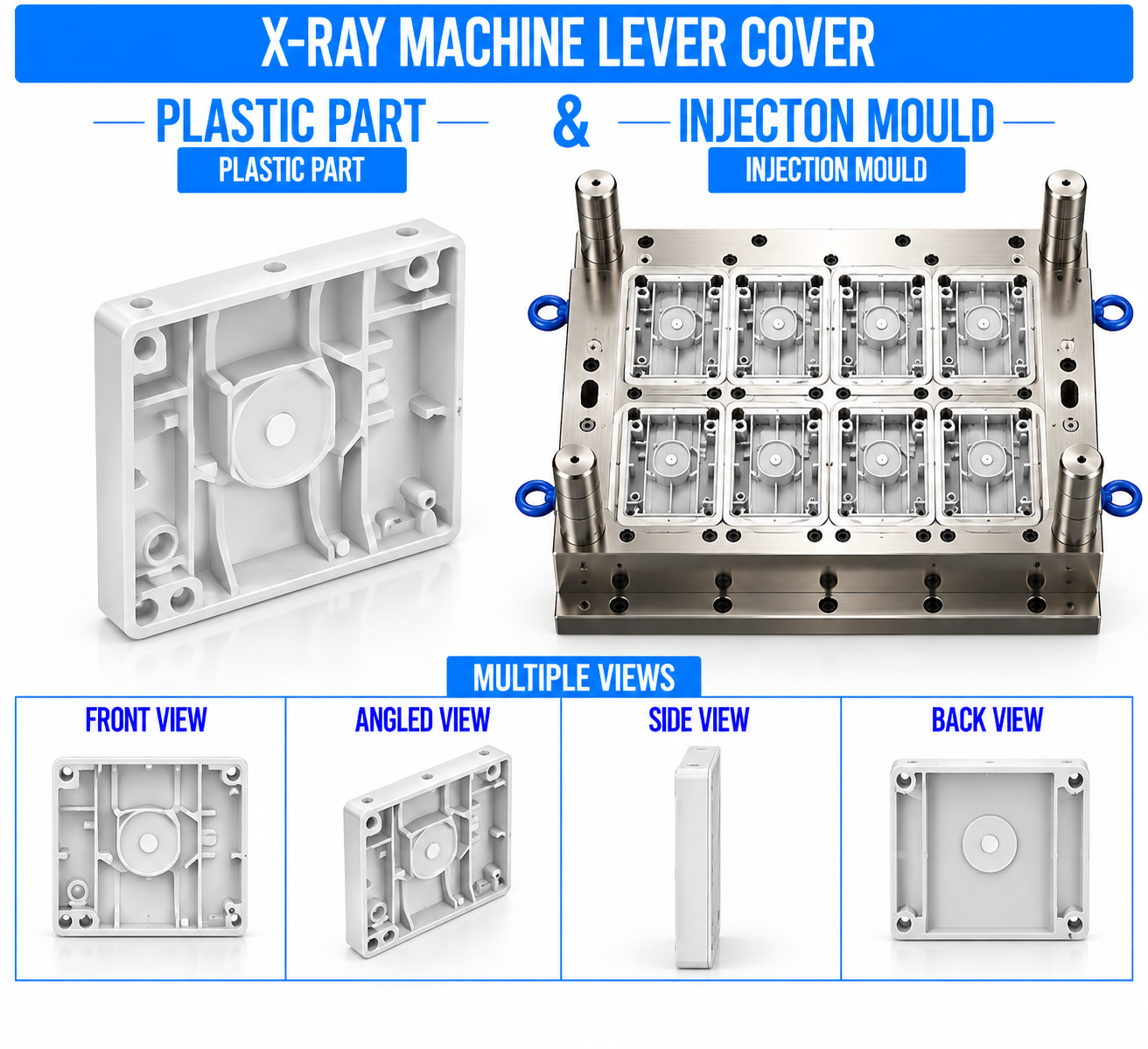
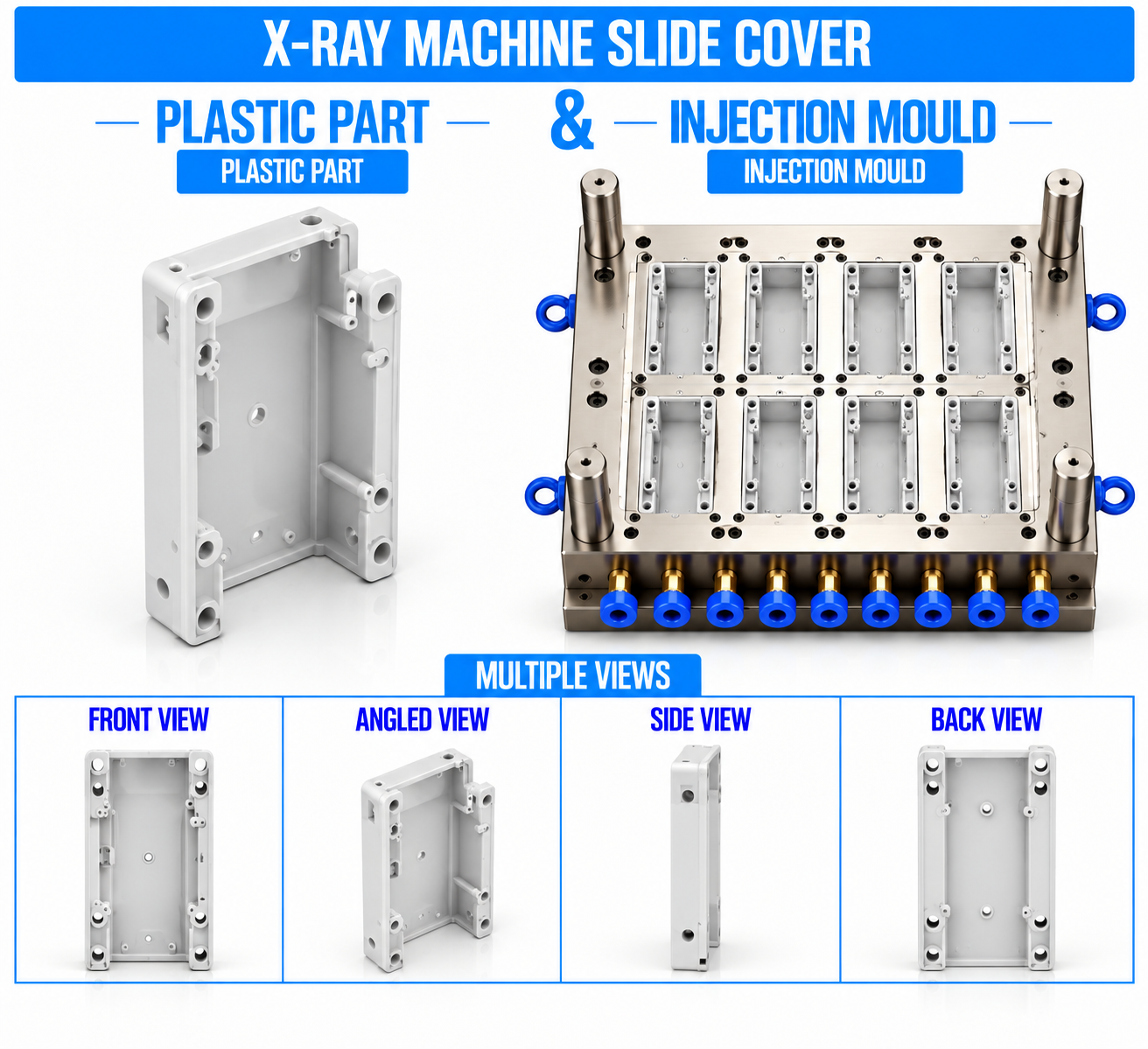
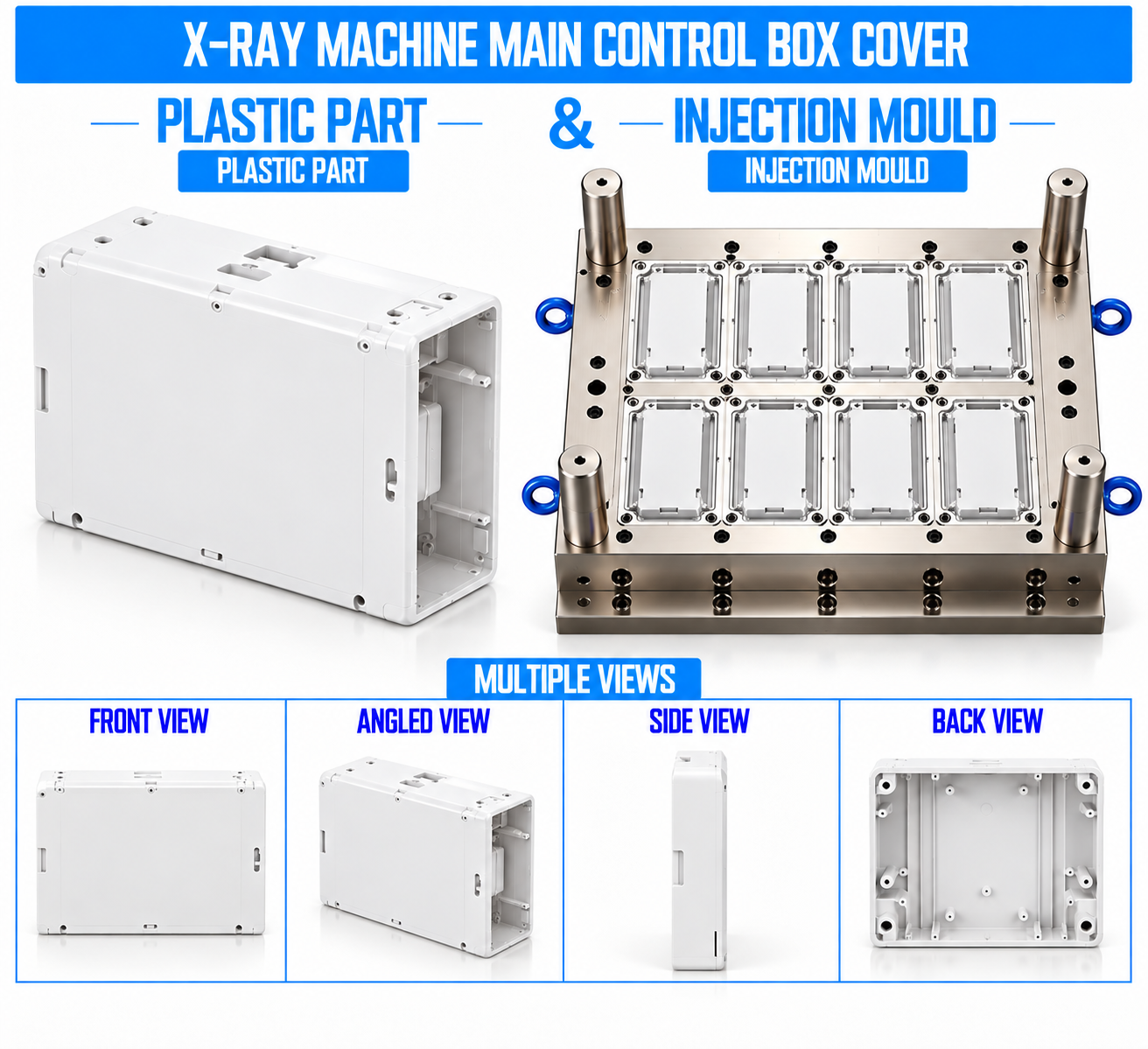
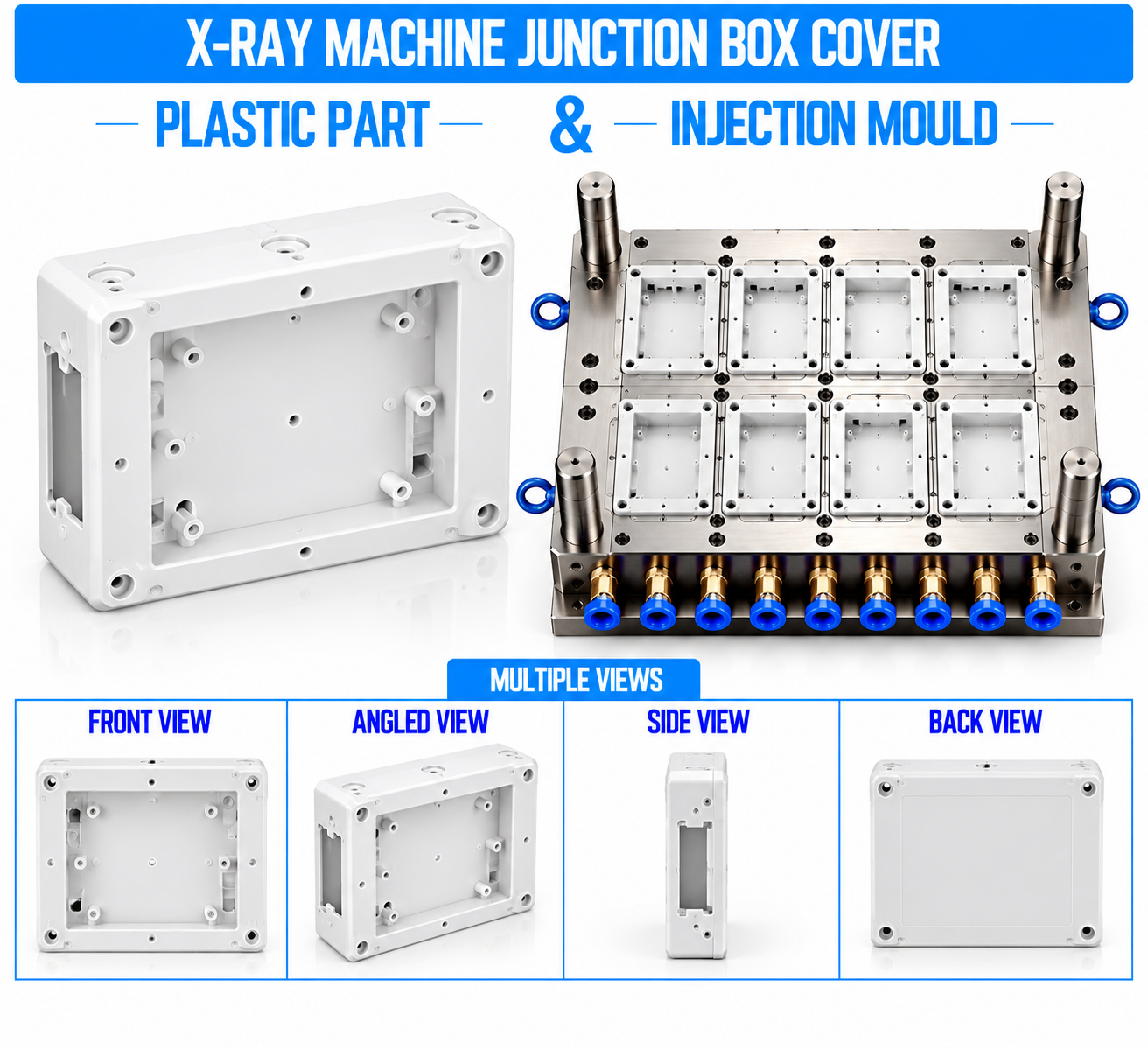
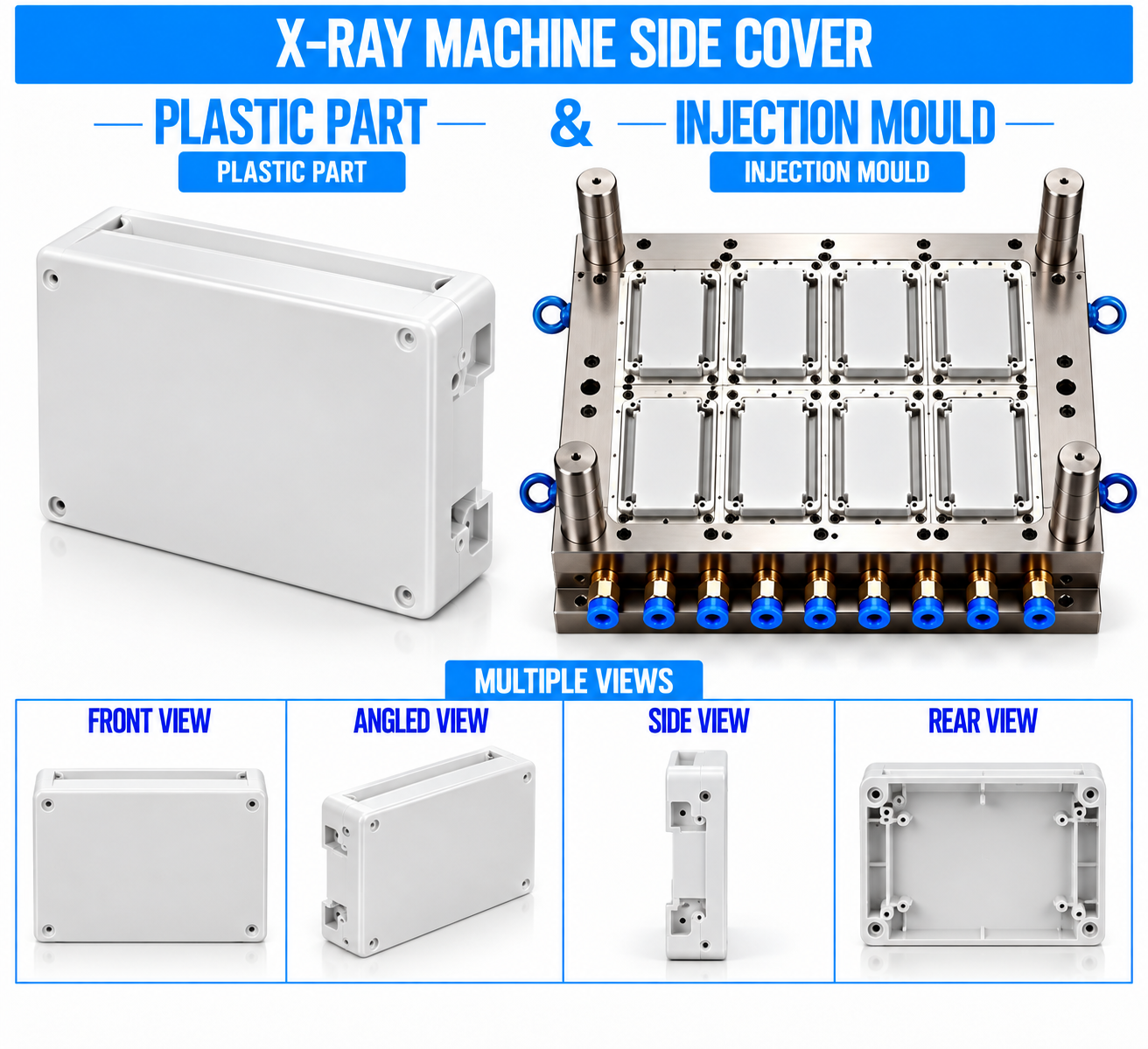
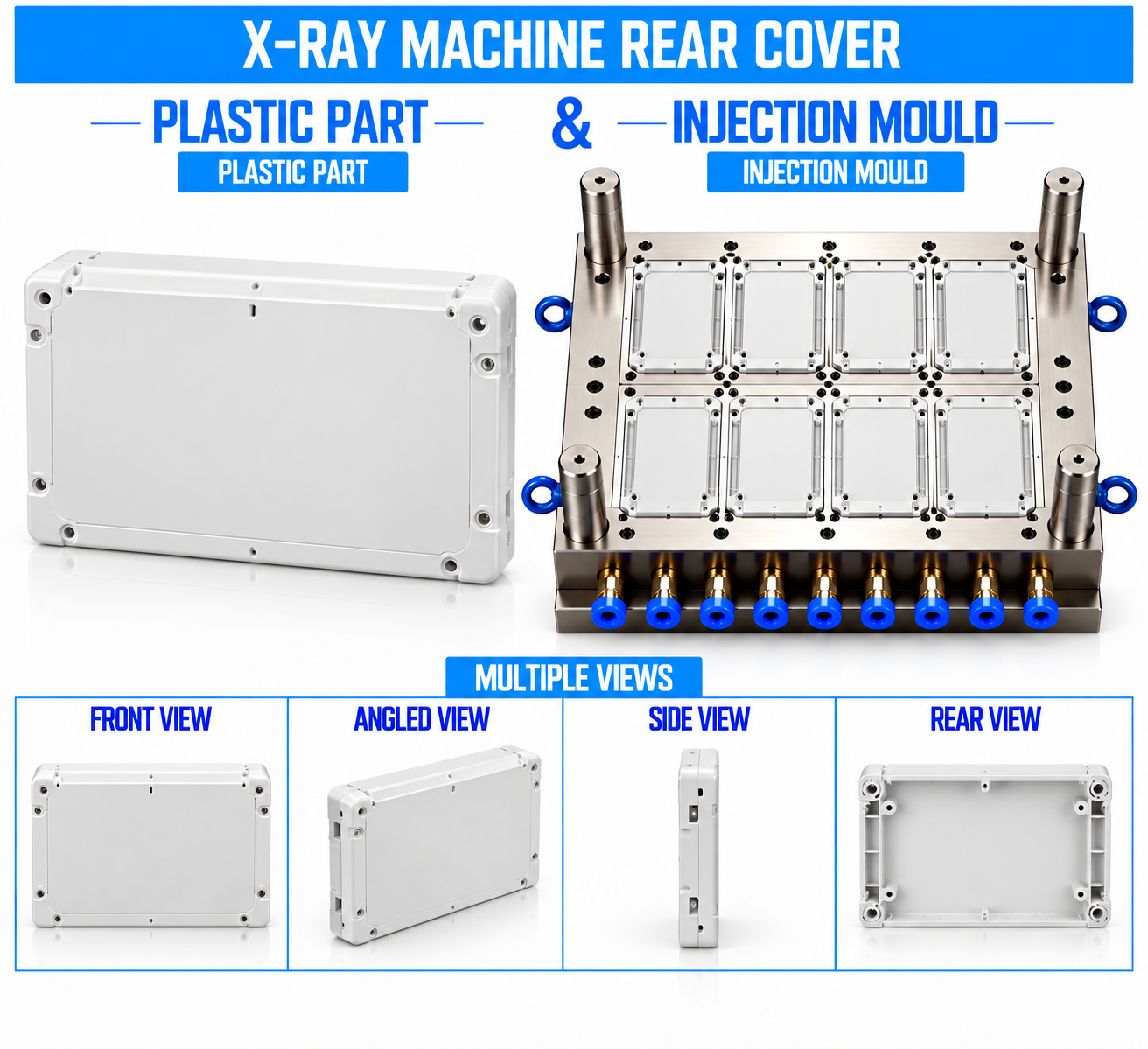
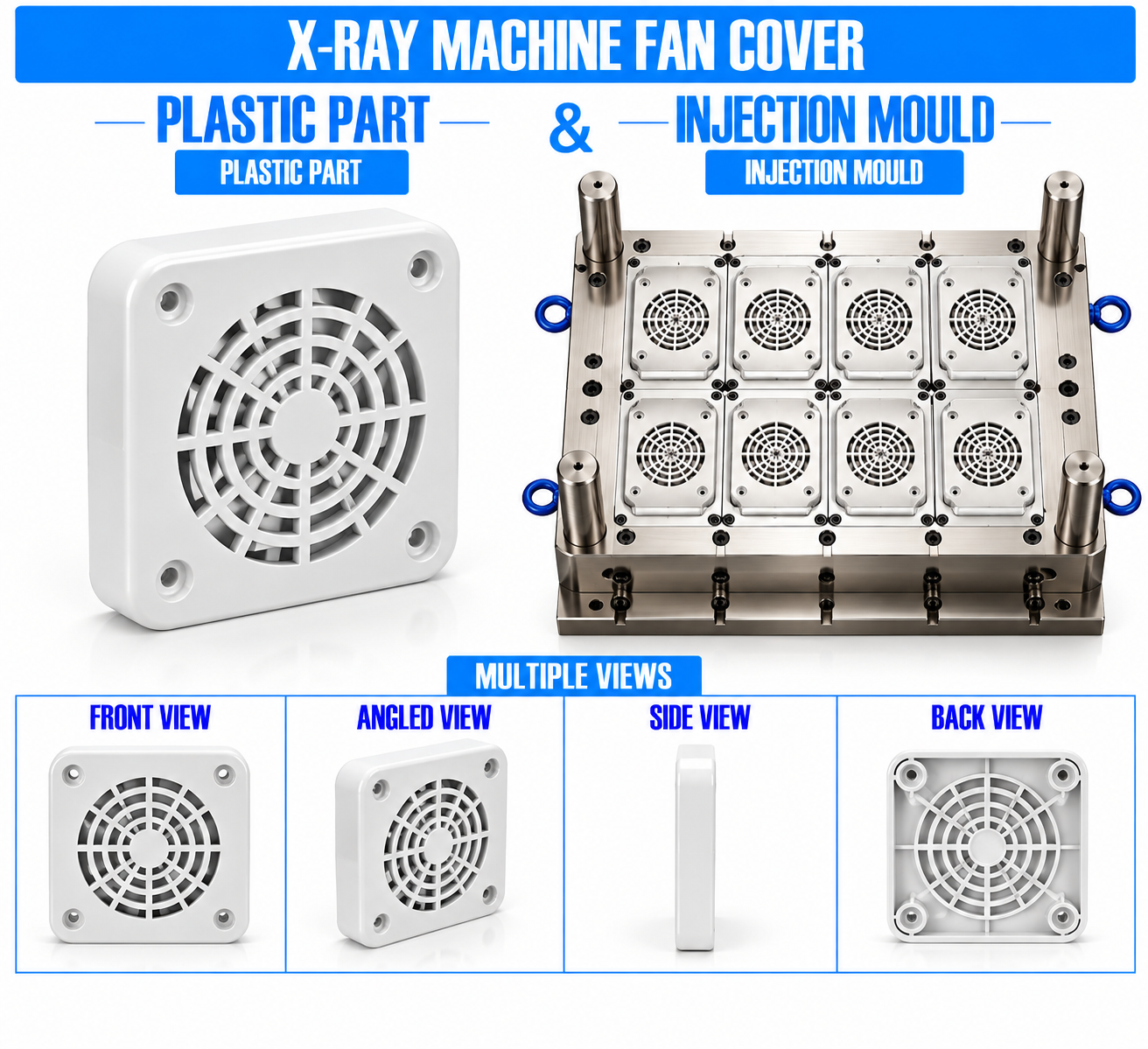
Renovator Appliances Ltd provides X-Ray Machine Plastic Parts Mould and Moulding Services for precision injection-moulded plastic components used in diagnostic X-ray equipment and related medical imaging assemblies. The service focuses on plastic housings, covers, panels, bezels, handles, cable-management components, control-interface parts, protective covers, and internal plastic mounting components that can be manufactured through injection moulding.
Each component is developed according to its equipment location, dimensional requirements, assembly interfaces, electrical clearances, ergonomic requirements, surface finish, and operating environment. For medical equipment, particular attention is given to dimensional consistency, clean surfaces, repeatable fitment, material traceability, and compatibility with the manufacturer's applicable requirements.
Key Features
Precision injection-moulded plastic components for X-ray equipment
Application-specific housing, cover, panel, and mounting-part designs
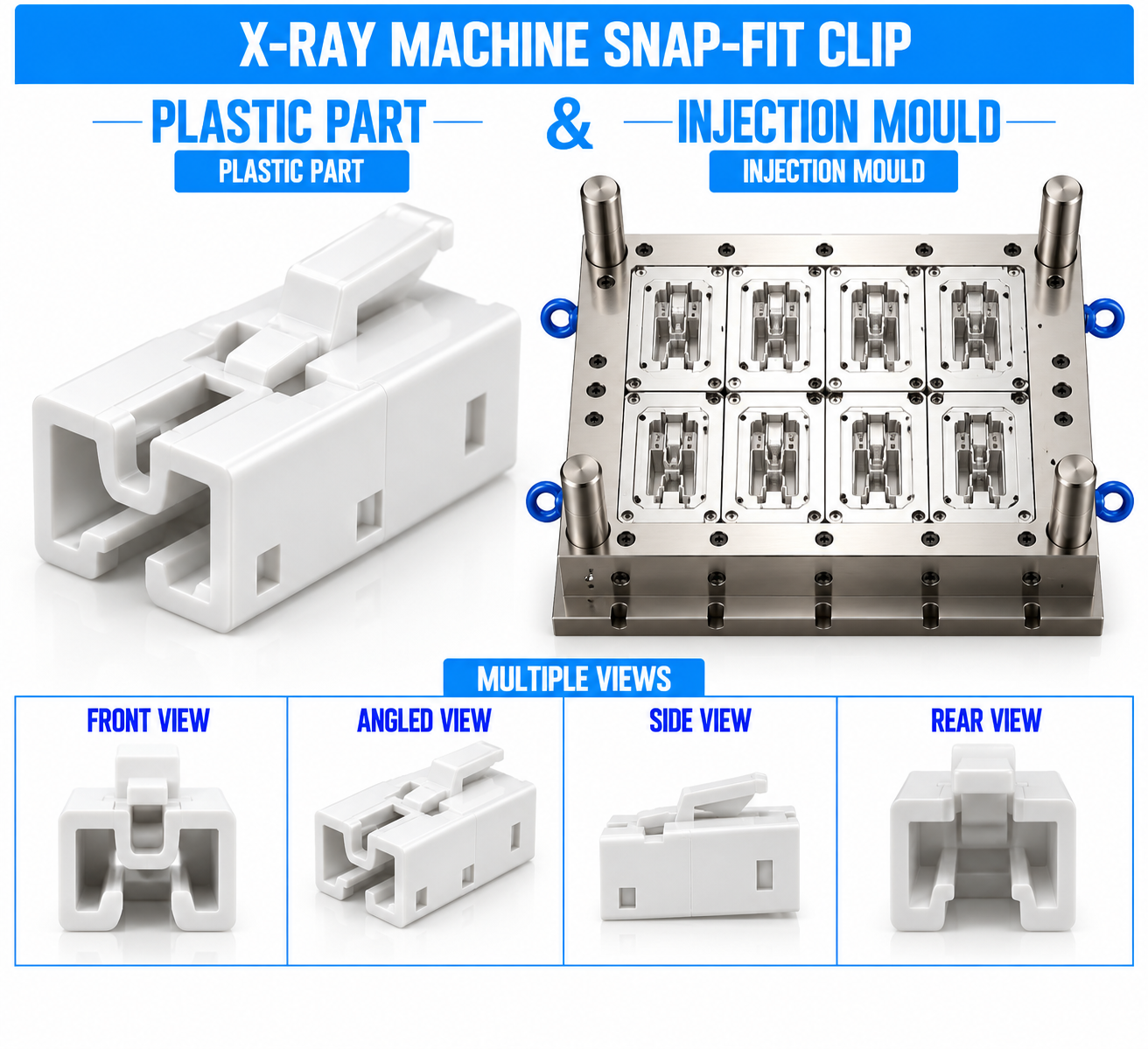
Accurate mounting bosses, locating features, clips, and fastening interfaces
Controlled wall thickness for dimensional stability
Smooth and consistent surfaces for medical equipment housings
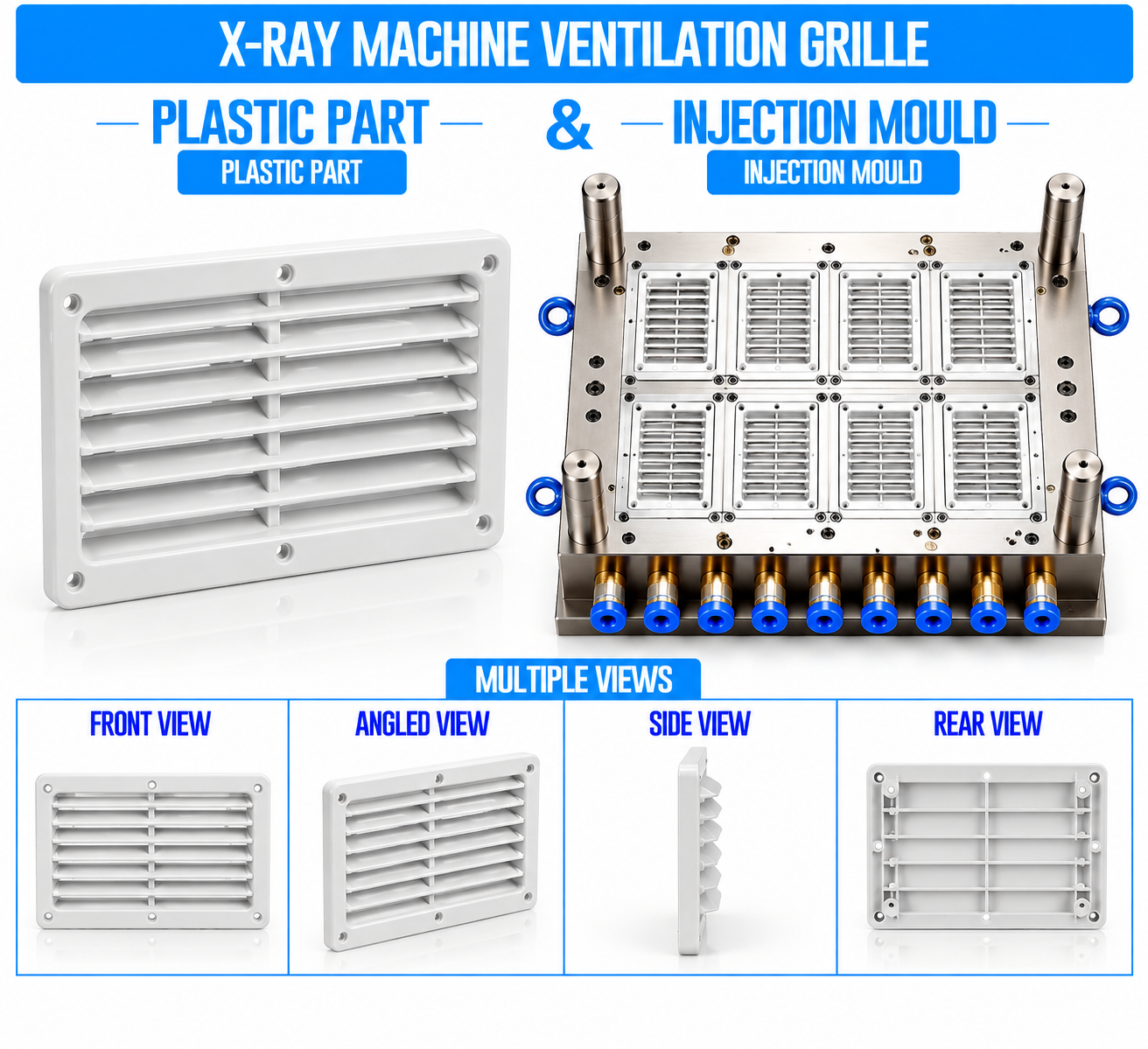
Precise openings for displays, controls, connectors, cables, and ventilation where required
Material selection based on mechanical, thermal, electrical, and environmental requirements
Designed to maintain reliable fitment with adjacent equipment assemblies
Support for customized OEM plastic components
Single-cavity or multi-cavity tooling according to component geometry and production requirements
Industrial Applications
| Plastic Part Category | Typical Application |
|---|---|
| Equipment Housing | Encloses selected electronic or mechanical assemblies where a plastic enclosure is specified |
| Control Panel Housing | Supports the mounting of controls, displays, indicators, and interface components |
| Display Bezel | Provides a finished mounting interface around a display or viewing area |
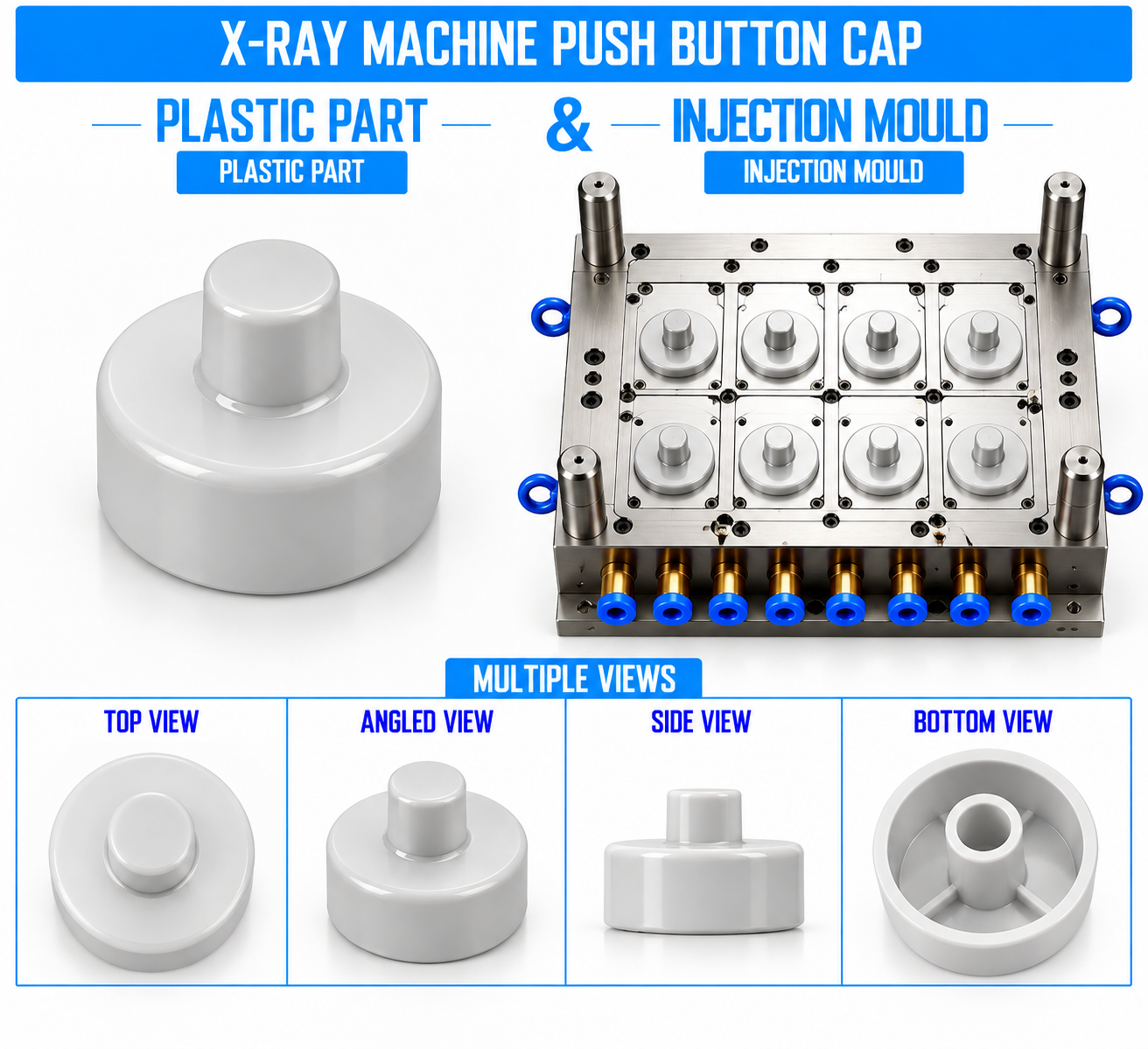
| Control Button Housing | Supports user-interface components and maintains accurate button positioning |
| Cable Cover | Protects and organizes specified cable-routing areas |
| Connector Cover | Provides protection around selected external connector interfaces |
| Internal Plastic Bracket | Locates and supports specified internal components |
| Handle Housing | Provides an ergonomic plastic interface for equipment handling where applicable |
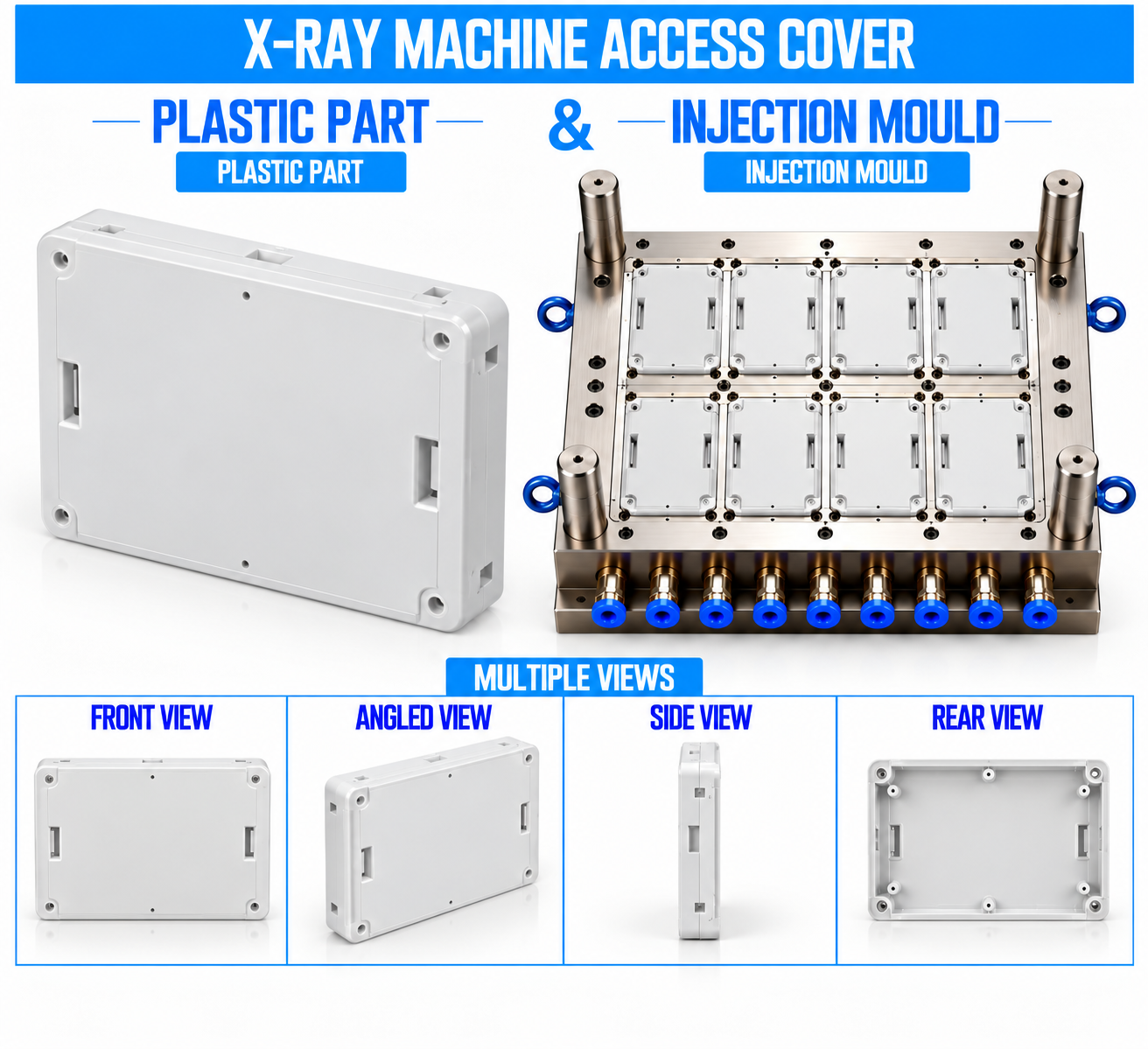
| Access Cover | Provides removable access to designated service areas |
| Protective Cover | Shields specified assemblies from accidental contact or contamination |
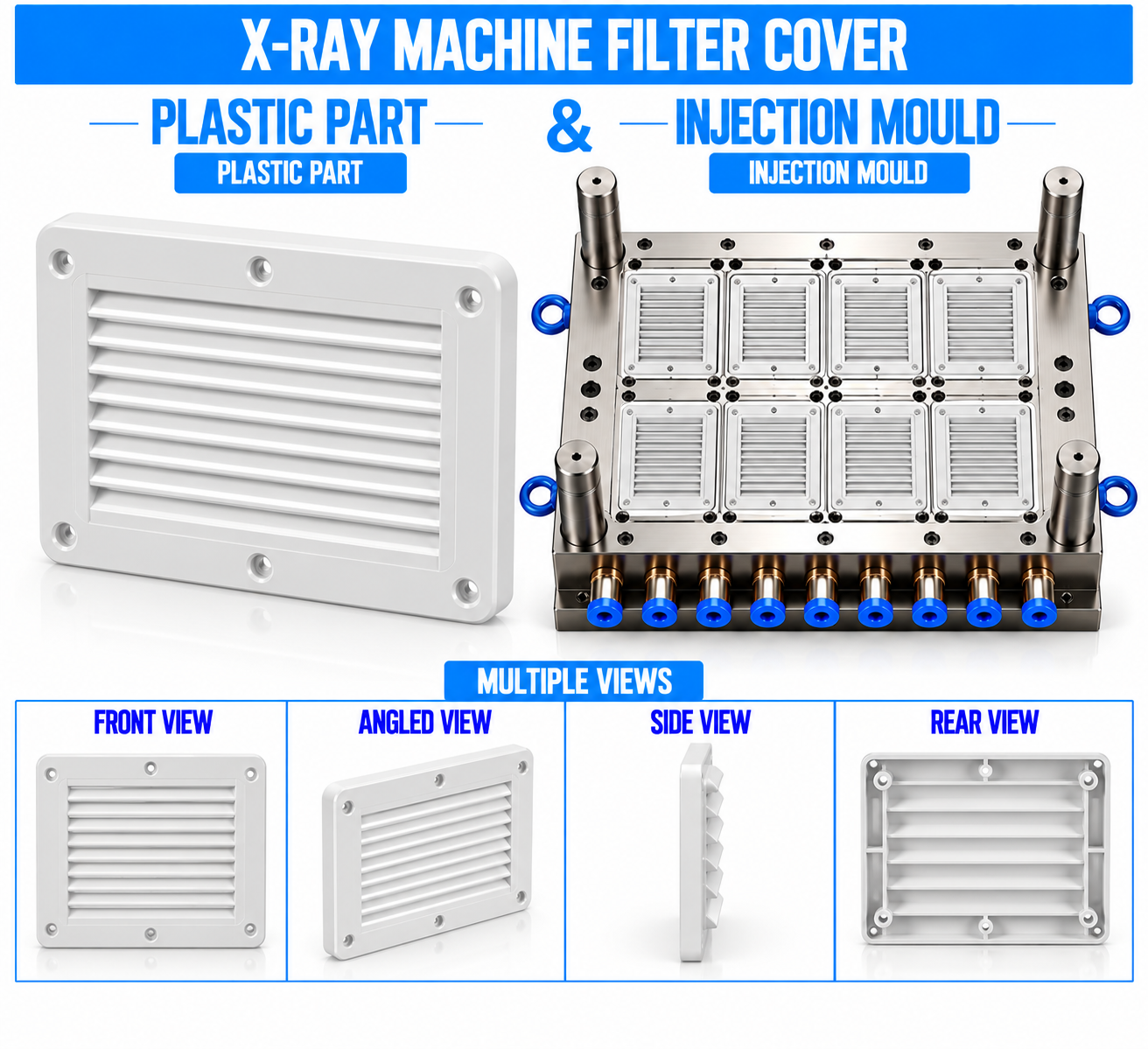
| Ventilation Grille | Provides controlled ventilation openings where required by the equipment design |
| Base or Trim Cover | Provides enclosure finishing and integration with the equipment structure |
Manufacturing Process
1. Product Design & Development
The plastic component is developed according to the X-ray equipment's approved mechanical design, component dimensions, mounting interfaces, required clearances, cable routing, control or display openings, and surrounding assemblies. Ergonomics, service access, surface finish, and assembly sequence are considered where relevant.
2. Plastic Mould Design
The mould is designed around the component's wall thickness, ribs, bosses, clips, openings, locating features, draft angles, and parting-line requirements. Gate position, cooling channels, venting, and ejection are optimized to achieve dimensional stability and minimize warpage, sink marks, weld-line problems, and flash.
For large equipment housings and panels, mould design also considers balanced filling and deformation control so that the finished component maintains accurate alignment with adjoining parts.
3. Mould Manufacturing
Moulds can be manufactured using P20, H13, or S136 Steel, depending on component geometry, production quantity, plastic material, surface-finish requirements, and expected mould life. CNC machining, EDM, drilling, polishing, fitting, and mould trials are used to produce the required cavity geometry.
4. Injection Moulding
The selected plastic material is processed using controlled injection pressure, melt temperature, holding pressure, cooling time, and cycle parameters. Process conditions are established according to the component geometry and material requirements to achieve consistent dimensions and appearance.
5. Finishing & Assembly Preparation
After moulding, components are inspected for flash, gate marks, sink marks, short shots, warpage, scratches, and other visible defects. Gates are trimmed where required, while mounting holes, clips, openings, and other functional features are checked before assembly.
6. Quality Inspection
Finished components are inspected against approved drawings, CAD data, samples, and applicable customer specifications. Critical dimensions, mounting interfaces, panel alignment, openings, wall thickness, and assembly fitment are verified according to the component's function.
Raw Materials
| Material | Application Consideration |
|---|---|
| ABS | Suitable for rigid equipment housings, bezels, covers, and visible components where the required mechanical and environmental conditions permit |
| PC+ABS | Can be considered where higher impact performance and dimensional stability are required |
| PC | Suitable for selected components requiring high impact resistance or specific transparency requirements |
| PP | Can be considered for suitable lightweight covers and internal components |
| HIPS | Suitable for selected rigid housing and cover applications |
| PA / Nylon | Can be considered for mechanically loaded internal plastic components |
| Glass-Filled Nylon | Suitable for selected components requiring increased stiffness and dimensional stability |
| Flame-Retardant Engineering Plastic | Considered where the equipment design requires specified flame-resistance characteristics |
The final material should be selected according to the component's mechanical loads, electrical environment, temperature exposure, chemical-cleaning requirements, dimensional stability, flame-resistance requirements, and applicable medical-equipment specifications.
Quality Control
Dimensional inspection against approved engineering drawings
Mounting-hole and boss-position verification
Panel and housing alignment checks
Display and control-opening dimensional inspection
Cable and connector opening verification
Wall-thickness consistency inspection
Warpage and deformation checks
Flash and gate-mark inspection
Surface-finish and appearance inspection
Clip and snap-fit engagement testing where applicable
Assembly fitment verification
Material identification and batch control
Production-process consistency monitoring
Buyer Guide
When sourcing X-Ray Machine Plastic Parts Mould and Moulding Services, buyers should provide approved 2D drawings, 3D CAD data, physical samples where available, required plastic grade, surface-finish specifications, production quantity, assembly requirements, and applicable customer or equipment standards.
For housings and panels, critical information should include mounting points, component openings, cable-routing requirements, internal clearances, adjacent-part interfaces, and service-access requirements. For internal brackets and supports, the dimensions and loads of the component being supported should be provided.
Material selection should be finalized according to the complete equipment design and applicable medical-device requirements rather than selecting a plastic solely based on appearance or general-purpose use.
Why Choose Renovator Appliances Ltd?
Advanced Injection Moulding Facility
Renovator Appliances Ltd uses controlled injection moulding processes for producing precision plastic components with consistent dimensions, surface quality, and repeatable assembly fitment.
In-House Mould Manufacturing
In-house mould manufacturing provides control over cavity geometry, cooling, ejection, mould fitting, and tooling trials for customized medical-equipment plastic components.
OEM & ODM Manufacturing
Plastic components can be developed from approved OEM drawings, CAD models, physical samples, or defined functional requirements.
Quality Assurance
Dimensional inspection, visual inspection, material control, and assembly verification help maintain consistent manufacturing quality across production batches.
Cost-Effective Manufacturing
Optimized mould design, suitable cavity configuration, material selection, and controlled production parameters support economical manufacturing for development and volume requirements.
Frequently Asked Questions
1. Which X-ray machine parts can be manufactured through plastic injection moulding?
Suitable components can include housings, covers, bezels, control-panel parts, handles, cable covers, connector covers, ventilation grilles, access covers, trim parts, and selected internal plastic brackets.
2. Can customized X-ray machine plastic parts be manufactured from a CAD model?
Yes. Approved 2D drawings or 3D CAD models can be used for mould development, with tooling and production specifications established according to the required component design.
3. Which plastics can be used for X-ray machine components?
ABS, PC+ABS, PC, PP, HIPS, Nylon, Glass-Filled Nylon, and suitable flame-retardant engineering plastics may be considered depending on the component's mechanical, thermal, electrical, dimensional, and regulatory requirements.
4. Can large X-ray machine housings and panels be injection moulded?
Yes, where the component geometry, required production volume, moulding machine capacity, tooling design, and material are suitable. Large panels require particular attention to filling balance, cooling, wall thickness, and warpage control.
5. Can Renovator manufacture plastic parts according to an existing X-ray machine component?
Yes. An existing sample, approved drawing, or CAD model can be used as a reference for mould development, subject to dimensional verification and the customer's applicable equipment specifications.
60
products found
60 products found