- Home
- About us
- Plastic Products and Moulds+
- Plastic Injection Moulding Services
- Industrial Plastic Crates and Moulds
- Air Conditioner Plastic Parts And Moulds
- Printer Plastic Parts and Moulds
- Laptop Plastic Parts And Moulds
- Vacuum Cleaner Plastic Parts and Moulds
- Air Cooler Plastic Parts and Moulds
- Water Dispenser Plastic Parts and Moulds
- Washing Machine Plastic Parts And Moulds
- Water Purifier Plastic Parts and Moulds
- Robot Plastic Parts Mould and Moulding Services
- CPU Plastic Parts and Moulds
- Refrigerator Plastic Parts and Moulds
- Air Blower Plastic Parts Mould and Moulding Services
- Food Processor Plastic Parts and Moulds
- Lawn Mower Plastic Parts Mould and Moulding Services
- Microwave Oven Plastic Parts Mould and Moulding Services
- Monitor Plastic Parts and Moulds
- Mixer Grinder Plastic Parts Mould and Moulding Services
- Chimney Plastic Parts Mould and Moulding Services
- Geyser Plastic Parts Mould and Moulding Services
- Humidifier Plastic Parts Mould and Moulding Services
- Air Purifier Plastic Parts Mould and Moulding Services
- Home Theatre Plastic Parts Mould and Moulding Services
- Steam Mop Plastic Parts Mould and Moulding Services
- Contact us
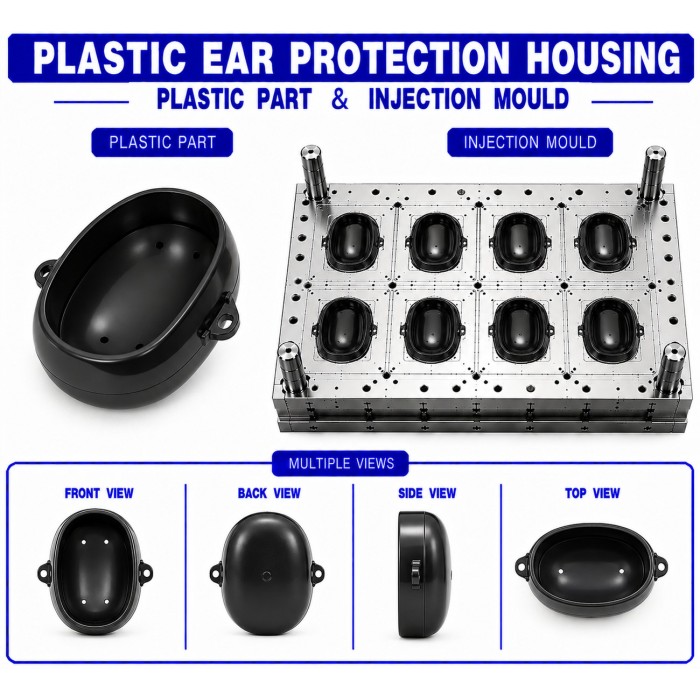
Plastic Ear Protection Housing Mould and Moulding Service
PEPH
Rs. 40.00
/ Pack (1 Piece) Plastic Ear Protection Housing Mould and Moulding Service | Renovator Appliances Ltd
Product Overview
Renovator Appliances Ltd provides professional Plastic Ear Protection Housing Mould and Moulding Services for manufacturing durable, lightweight, ergonomic, and customizable plastic housings used in earmuffs, hearing protection devices, industrial safety equipment, construction PPE, workshops, manufacturing facilities, and noise-protection products.
Our complete service includes product design, 3D modelling, mould design, mould manufacturing, mould trials, plastic injection moulding, prototype development, quality inspection, finishing, and bulk production according to customer requirements.
The ear protection housing can be customized according to ear cup size, acoustic chamber dimensions, headband connection, cushion mounting, hinge mechanism, adjustment slots, ventilation requirements, wall thickness, surface texture, color, and branding.
Types of Plastic Ear Protection Housings
Plastic Ear Protection Housing
Plastic Hearing Protection Housing
Plastic Earmuff Housing
Plastic Ear Cup Housing
Plastic Safety Earmuff Housing
Plastic Industrial Earmuff Housing
Plastic Noise Protection Housing
Plastic Hearing Protector Housing
Plastic Communication Earmuff Housing
Plastic Electronic Earmuff Housing
Plastic Passive Earmuff Housing
Plastic Adjustable Earmuff Housing
Plastic Foldable Earmuff Housing
Plastic Customized Ear Protection Housing
Plastic OEM Ear Protection Housing
Key Features
Durable Housing Construction
The housing can be designed with suitable wall thickness, ribs, bosses, and reinforcement for durability during normal use.
Ergonomic Ear Cup Design
The housing geometry can be developed according to the required ear-cup dimensions and user comfort requirements.
Acoustic Chamber Compatibility
The internal housing geometry can be designed to accommodate the specified acoustic components and sound-attenuating materials.
Cushion Mounting
Suitable grooves, channels, clips, or retention features can be incorporated for compatible ear cushions.
Headband Connection
The housing can include mounting points for headbands, brackets, adjustment mechanisms, or other retention systems.
Adjustable Mechanism
Slots, pivots, hinges, sliders, and other adjustment features can be incorporated according to the product design.
Lightweight Construction
Material thickness and structural geometry can be optimized to reduce unnecessary weight.
Surface Finish
Smooth, matte, textured, or customized surfaces can be produced according to customer requirements.
Customized Branding
Logos, product codes, molded identification, colors, and other branding features can be incorporated.
Industrial Applications
| Industry | Application |
|---|---|
| Manufacturing Industry | Industrial hearing protection |
| Construction Industry | Noise protection equipment |
| Automotive Industry | Workshop hearing protection |
| Metalworking Industry | Noise-control PPE |
| Mining Industry | Industrial hearing protection |
| Aviation Industry | Suitable hearing protection applications |
| Woodworking Industry | Workshop noise protection |
| Power Industry | Noise exposure protection |
| OEM PPE Brands | Customized earmuff manufacturing |
| Safety Equipment Industry | Hearing protection products |
Manufacturing Process
Product Design & Development
Customer drawings, 3D models, ear-cup dimensions, acoustic chamber requirements, cushion mounting, headband connection, hinge mechanism, adjustment system, material specifications, and branding requirements are reviewed.
Engineering Analysis
The housing is evaluated for wall thickness, draft angle, shrinkage, mould filling, cooling, ejection, ribs, bosses, hinges, mounting interfaces, and dimensional stability.
Mould Design
The Plastic Ear Protection Housing mould is designed using CAD/CAM software according to the approved product geometry and production requirements.
CNC & EDM Machining
Mould components are manufactured using CNC machining, EDM, Wire Cut EDM, drilling, grinding, and precision tooling processes.
Mould Assembly
Mould components are assembled and checked for alignment, cooling channels, guide systems, ejector operation, inserts, and proper mould operation.
Mould Trial & Sampling
Trial housings are produced and inspected for dimensions, ear-cup fit, cushion mounting, headband connection, hinge operation, surface quality, and appearance.
Injection Moulding Production
The selected plastic material is processed using suitable injection moulding machines to manufacture the ear protection housings.
Cooling & Ejection
Moulded housings are cooled and carefully ejected to maintain dimensional accuracy and minimize deformation.
Finishing
Flash and excess plastic are removed. Printing, labeling, coating, or other approved finishing operations can be performed.
Assembly
Where required, the housing can be assembled with ear cushions, acoustic foam, headbands, hinges, brackets, adjustment components, and other compatible parts.
Quality Inspection
Finished housings are inspected for dimensions, assembly fit, surface quality, appearance, and customer-defined specifications.
Raw Materials
| Material | Description |
|---|---|
| ABS | Suitable for rigid ear protection housings requiring dimensional stability and good surface finish. |
| PP | Lightweight option for selected housing applications. |
| PC | Suitable for applications requiring higher impact resistance. |
| PA (Nylon) | Can be considered for applications requiring higher mechanical performance. |
| TPE/TPU | Can be used for selected flexible or comfort components. |
Material selection should be based on mechanical requirements, impact resistance, chemical exposure, temperature, acoustic assembly requirements, flexibility, and applicable safety standards.
Mould Material
| Mould Material | Application |
|---|---|
| P20 Steel | Suitable for general-purpose and medium-volume ear protection housing moulds. |
| H13 Steel | Suitable for demanding production applications requiring higher mould durability. |
| S136 Steel | Suitable for applications requiring corrosion resistance and high-quality mould surfaces. |
The final mould material depends on production volume, expected mould life, product geometry, plastic material, surface finish, and customer requirements.
Quality Control
Raw Material Inspection
Plastic resin is checked for grade, quality, color, and suitability for the intended application.
Mould Inspection
Cavity dimensions, cushion mounting features, headband interfaces, hinge areas, cooling systems, ejector systems, guide components, and mould alignment are inspected.
First Sample Inspection
Initial housings are checked against approved drawings, samples, or product specifications.
Dimensional Inspection
Ear-cup dimensions, wall thickness, mounting points, hinge locations, adjustment slots, and other critical dimensions are verified.
Cushion Fitment Inspection
The housing is checked for correct fit and retention of the compatible ear cushion or sealing component.
Headband Assembly Inspection
Housing-to-headband connection points are checked for proper alignment and assembly.
Visual Inspection
Products are checked for flash, sink marks, warpage, short shots, scratches, bubbles, contamination, and other visible defects.
Surface Finish Inspection
Gloss, matte finish, texture, molded details, and branding features are inspected.
Safety & Performance Compliance
If the finished earmuff is intended to be marketed as certified hearing protection, the complete assembled product should undergo the applicable acoustic attenuation and safety testing required for its intended market. The plastic housing alone does not establish hearing-protection performance.
Buyer Guide
When selecting a Plastic Ear Protection Housing Mould and Moulding Service, consider:
Ear Cup Dimensions
Specify outer diameter, height, depth, internal clearance, and overall housing dimensions.
Acoustic Design
Provide the required internal chamber dimensions and compatibility requirements for acoustic foam, inserts, or other components.
Cushion Mounting
Specify groove, clip, snap-fit, or other ear-cushion retention method.
Headband Connection
Specify bracket, hinge, pivot, slider, or direct mounting arrangement.
Adjustment Mechanism
Specify required height adjustment, rotation, folding, or other movement.
Material Selection
Select ABS, PP, PC, PA, or another suitable engineering plastic according to the application.
Surface Finish
Choose smooth, matte, textured, or customized finish.
Color
Specify black, white, colored, dual-color, or customized color requirements.
Branding
Logos, molded identification, product codes, and other branding elements can be incorporated.
Production Quantity
Production quantity helps determine mould configuration, cavity count, machine capacity, cycle time, and manufacturing strategy.
Production Capacity
Production capacity depends on housing size, product weight, mould cavity configuration, injection moulding machine, cycle time, plastic material, cooling requirements, assembly operations, and production quantity.
For example, a 4-cavity mould operating with a 25-second cycle time has a theoretical output of approximately 576 moulded housings per hour.
Actual production capacity may vary according to cooling requirements, machine efficiency, material preparation, inspection, finishing, assembly, and packaging.
Why Choose Renovator Appliances Ltd?
Complete Mould Development
Product design, mould design, mould manufacturing, mould trials, sampling, and production support.
Precision Assembly Interfaces
Accurate cushion grooves, headband mounts, hinge points, adjustment slots, and other critical interfaces can be developed according to approved drawings.
Customized Housing Design
Housing size, shape, acoustic chamber, mounting system, surface finish, color, and branding can be customized.
OEM & ODM Solutions
Customized ear protection housing mould development and contract plastic manufacturing support for PPE and hearing-protection brands.
Assembly Support
Ear cushions, acoustic components, headbands, hinges, brackets, and other compatible components can be assembled according to customer requirements.
Quality-Focused Manufacturing
Controlled moulding and inspection processes help maintain consistent dimensions, fitment, appearance, and product quality.
Frequently Asked Questions
Q1. What is a Plastic Ear Protection Housing Mould?
A Plastic Ear Protection Housing mould is a precision-engineered mould used to manufacture the rigid outer housing or ear cup of an earmuff or hearing-protection device.
Q2. Which plastics can be used for ear protection housings?
Common options include ABS, PP, PC, and PA, depending on the required mechanical strength, weight, durability, and operating environment.
Q3. Can the housing be customized for different earmuff designs?
Yes. Ear-cup dimensions, acoustic chamber, cushion mounting, headband connection, hinge, adjustment mechanism, surface finish, color, and branding can be customized.
Q4. Can the housing accommodate acoustic foam?
Yes. The housing can be designed with suitable internal geometry for compatible acoustic foam, inserts, or other attenuation components.
Q5. Does Renovator Appliances Ltd provide complete mould and moulding services?
Yes. Renovator Appliances Ltd provides complete Plastic Ear Protection Housing Mould and Moulding Services, including product development, mould design, mould manufacturing, mould trials, injection moulding, assembly support, quality inspection, finishing, and bulk production.
Plastic Product Parts
Mould Material : P20 Steel / H13 Steel / S136 Steel
Plastic Grade : Engineering Grade / UV Stabilized Grade / Flame Retardant GradeProduct Material : ABS / PP / PC / NylonMould Type : Single Cavity Mould / Multi Cavity Mould / Hot Runner MouldWeight : 30–180 gDimensions : 100 × 80 × 50 mm to 180 × 150 × 100 mmRelated Products
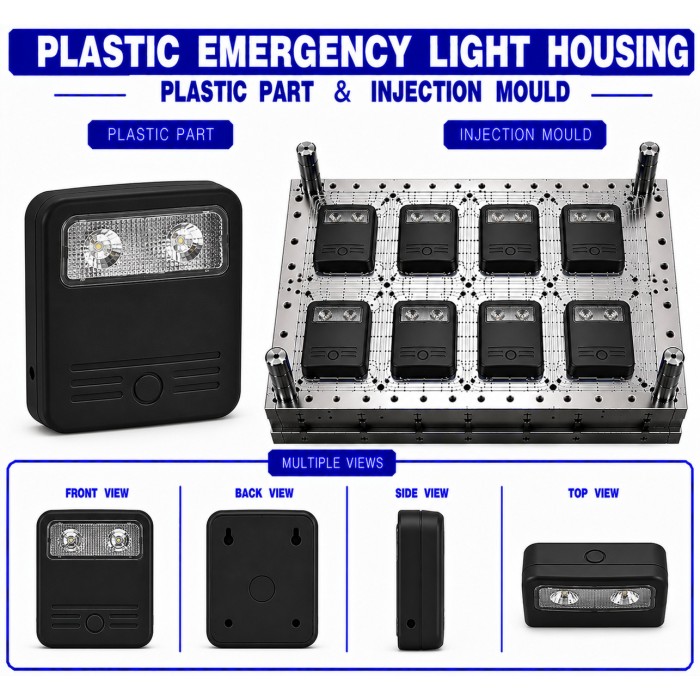
Plastic Emergency Light Housing Mould and Moulding Service
Plastic Emergency Light Housing Mould and Moulding Service | Renovator Appliances LtdProduct Overvie..