Home / Categories / Laptop Plastic Parts And Moulds
Laptop Plastic Parts And Moulds
Laptop Plastic Parts And Moulds Manufacturer in Greater Noida
Precision Laptop Plastic Components & Injection Mould Manufacturing
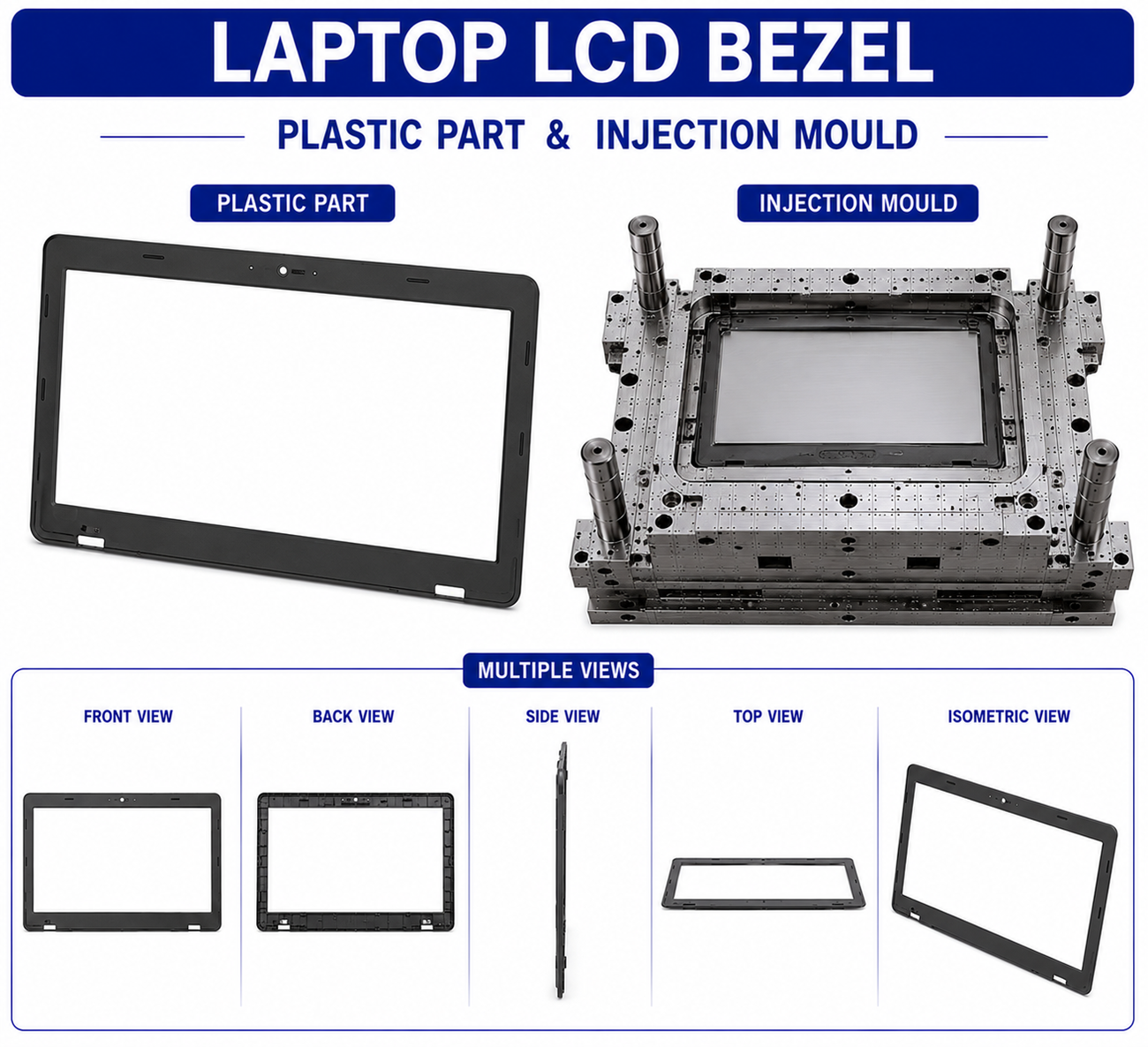
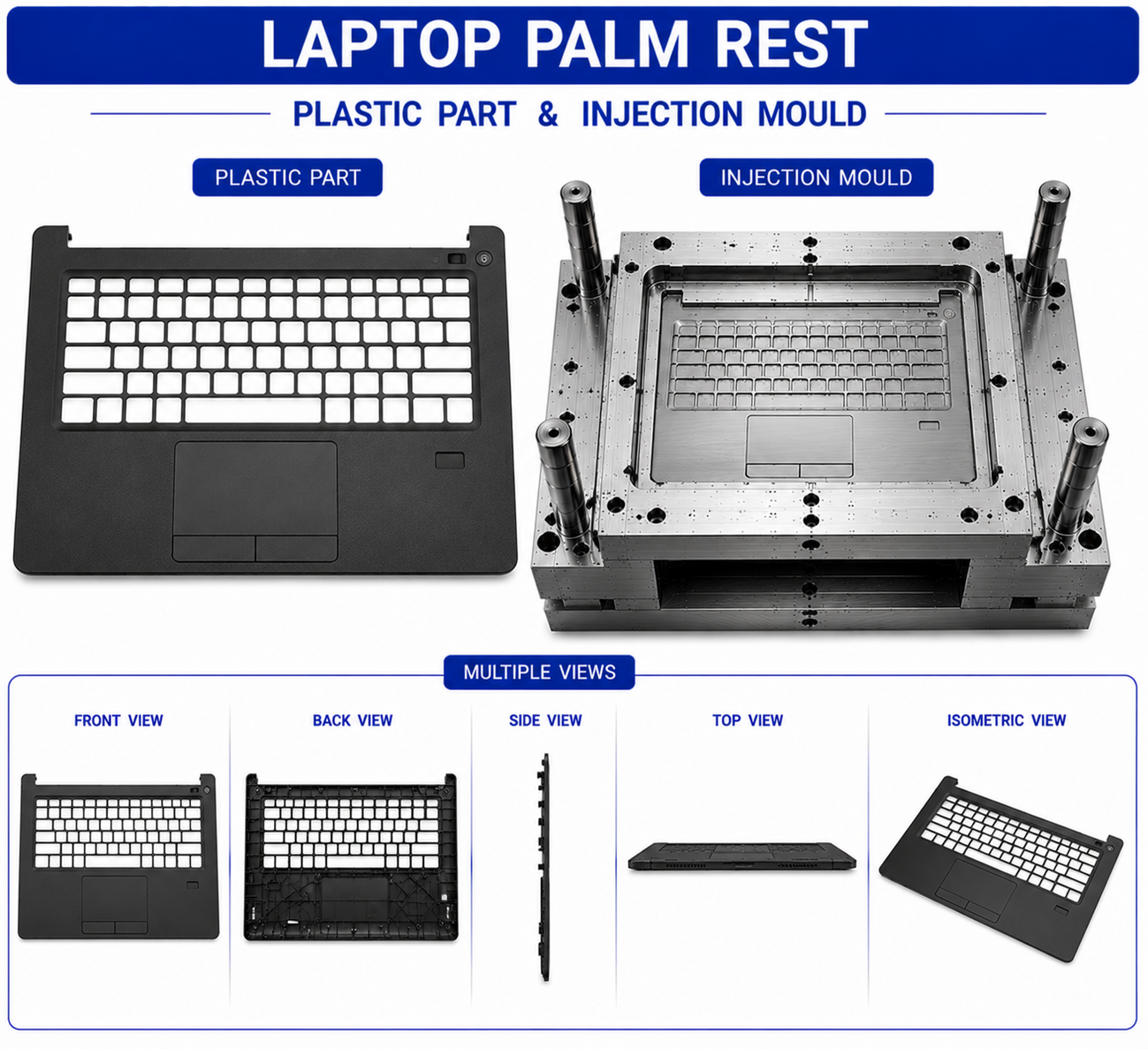
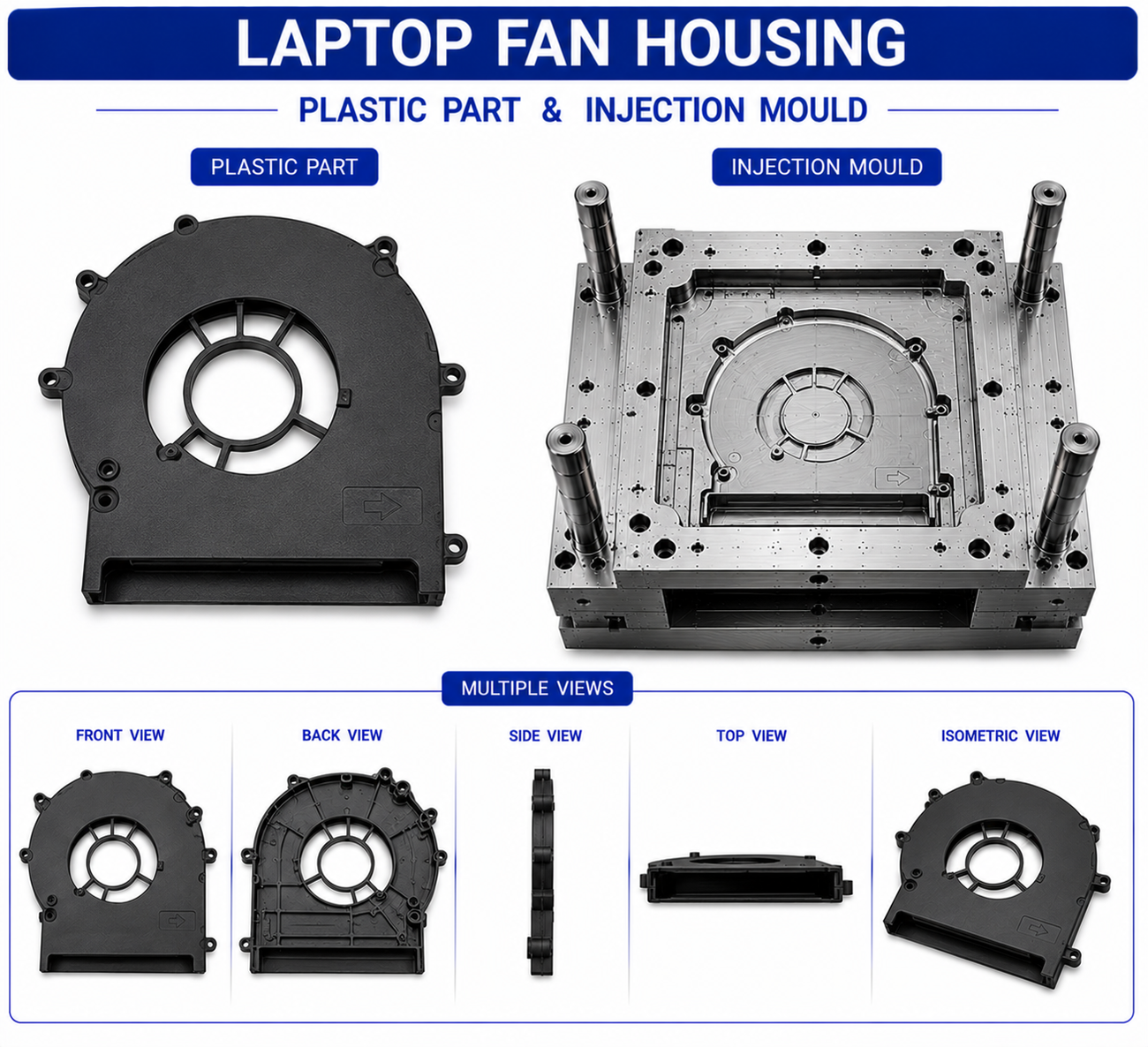
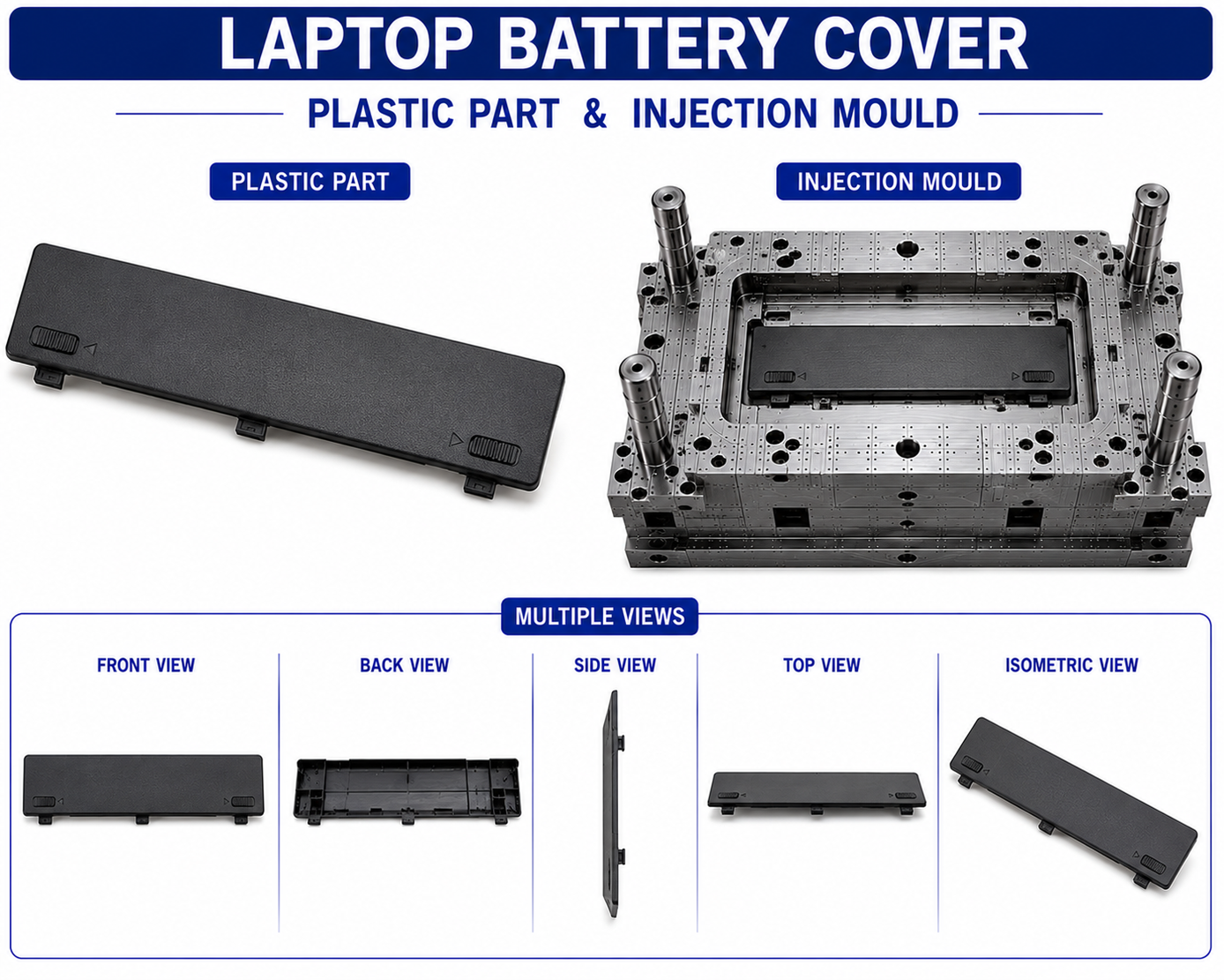
Renovator Appliances Ltd is a trusted manufacturer of Laptop Plastic Parts and Moulds in Greater Noida, specializing in precision injection moulding, custom mould development, and OEM plastic component manufacturing. We manufacture high-quality laptop housings, bezels, keyboard frames, battery covers, internal structural parts, and other engineering plastic components using advanced injection moulding technology.
Our manufacturing facility is equipped with modern CNC machining centers, EDM, wire-cut machines, CAD/CAM design software, and high-capacity injection moulding machines to produce dimensionally accurate plastic components with excellent surface finish and consistent quality. Whether you require prototype tooling or high-volume production, our engineering team delivers reliable and cost-effective manufacturing solutions.
What are Laptop Plastic Parts and Moulds?
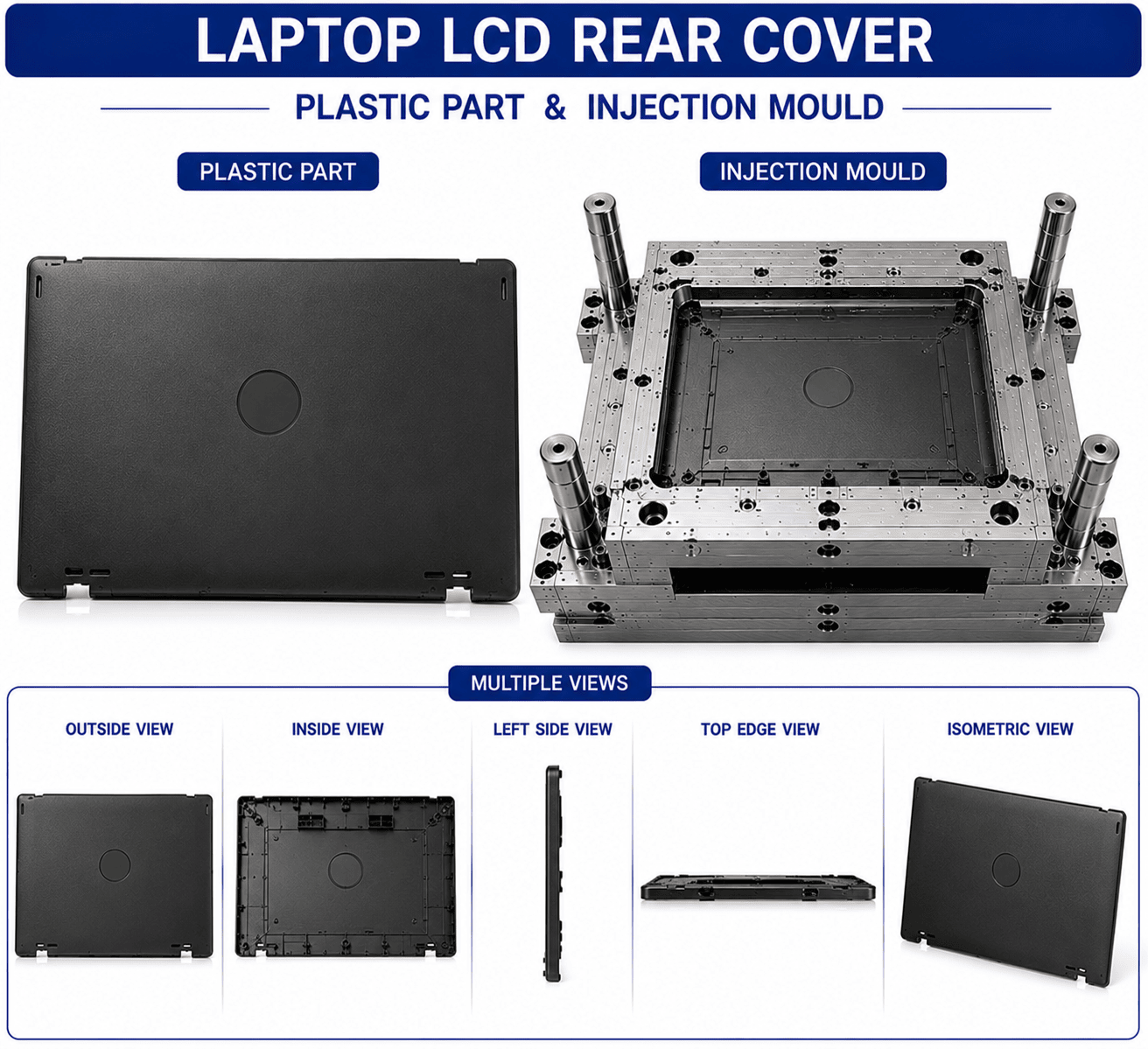
Laptop Plastic Parts are engineered plastic components that form the external body and internal support structure of laptops. These parts provide durability, lightweight construction, electrical insulation, heat resistance, and an attractive appearance while protecting sensitive electronic components.
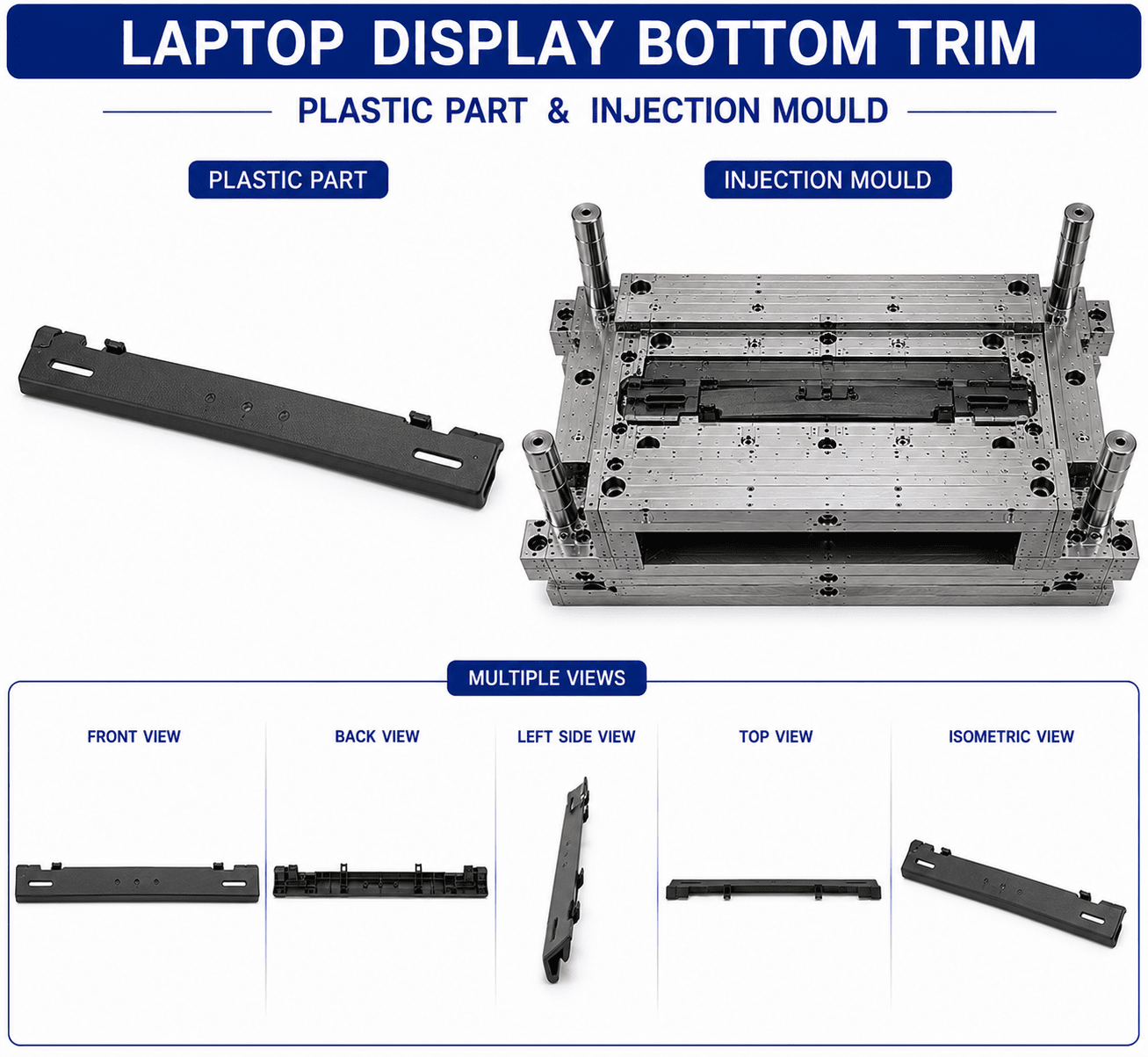
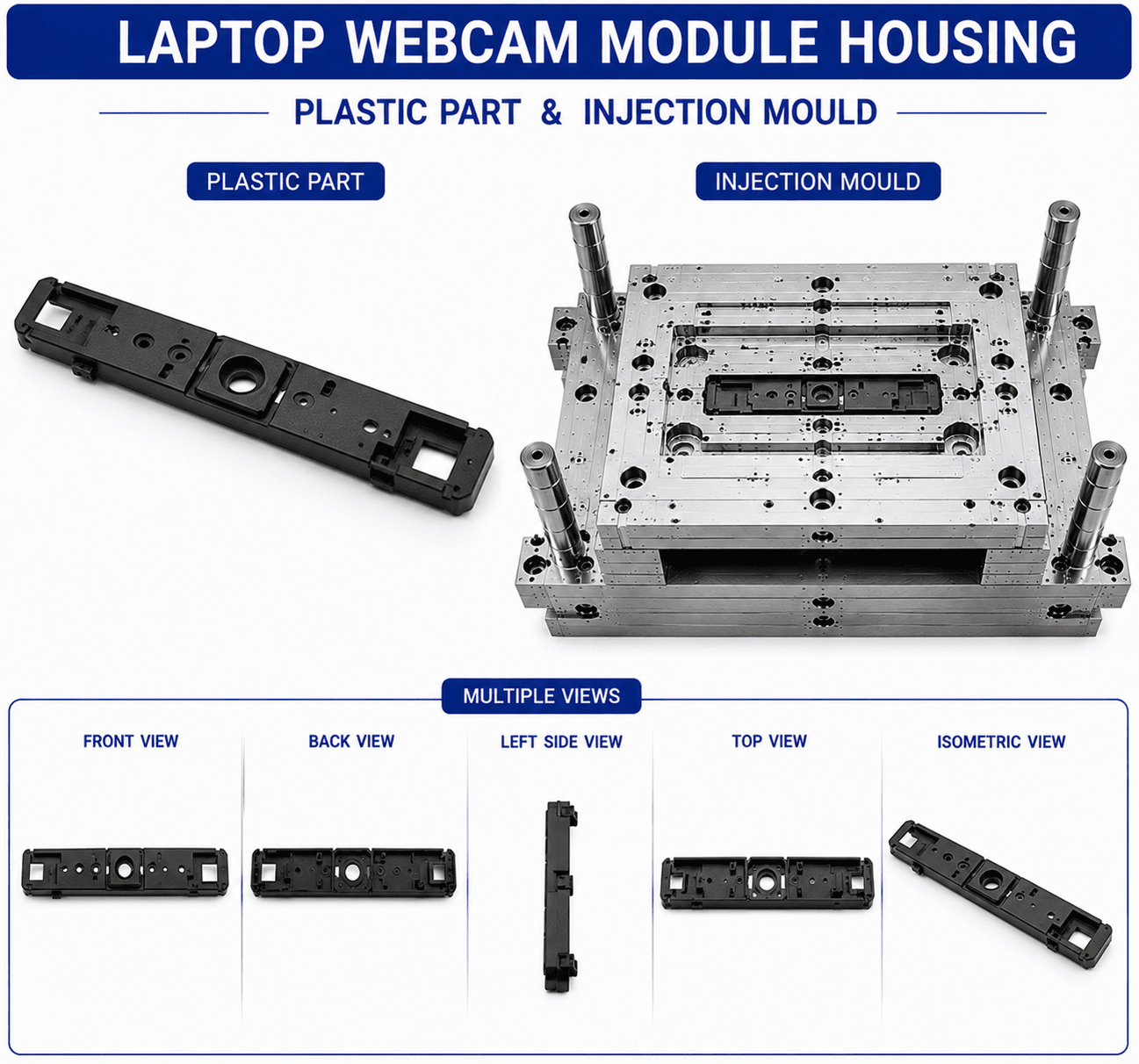
Laptop plastic moulds are precision-engineered steel tools used to manufacture these components repeatedly with identical dimensions and tight tolerances. A well-designed mould ensures high production efficiency, minimal material wastage, excellent surface finish, and long service life.
Because laptop components require precise fitting and assembly, moulds are manufactured with micron-level accuracy to maintain consistent quality throughout mass production.
Laptop Plastic Parts We Manufacture
We manufacture a wide range of laptop plastic components, including:
- Laptop Top Cover
- LCD Back Cover
- LCD Front Bezel
- Bottom Base Cover
- Palm Rest Assembly
- Keyboard Frame
- Touchpad Housing
- Battery Cover
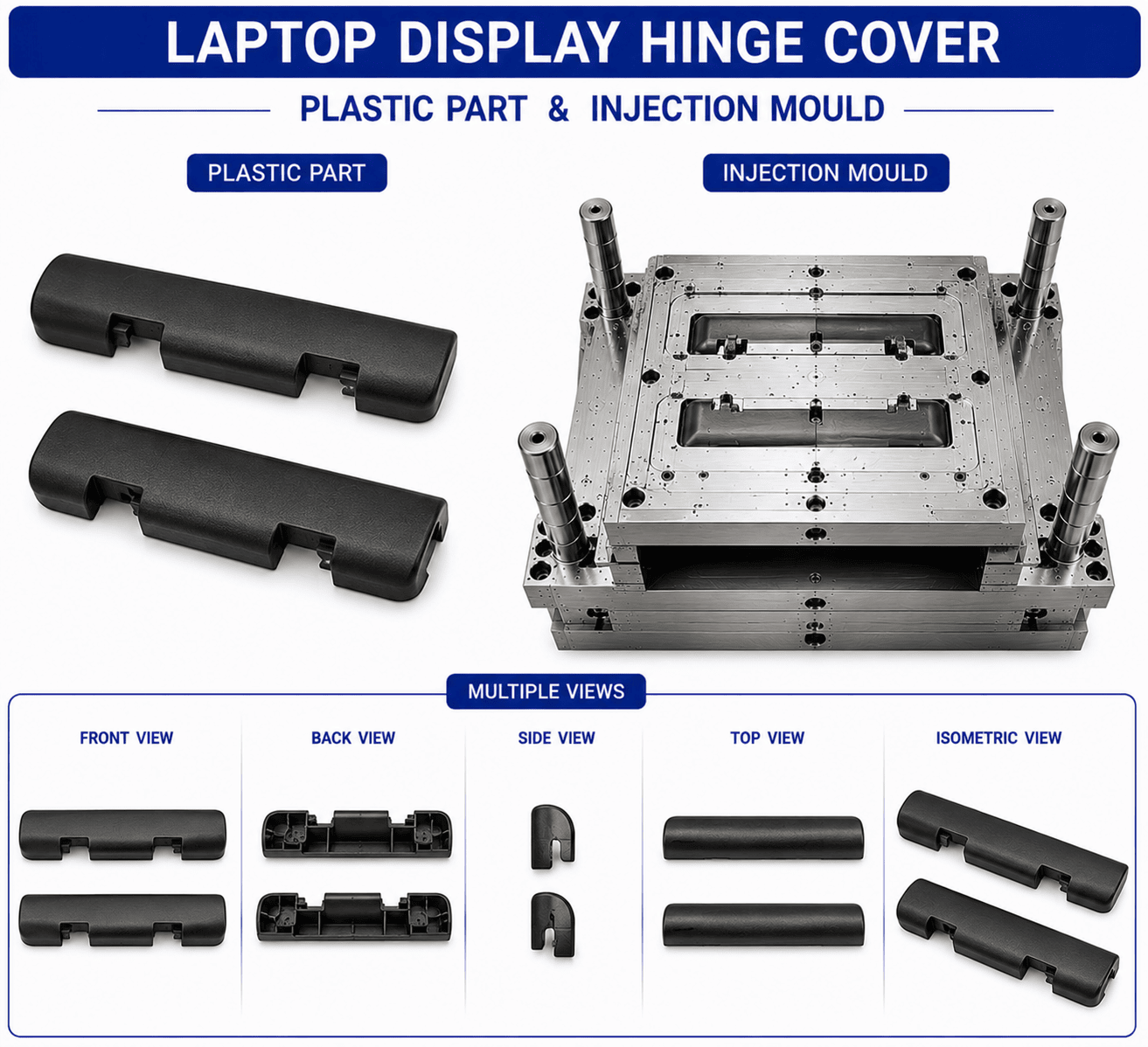
- Hinge Covers
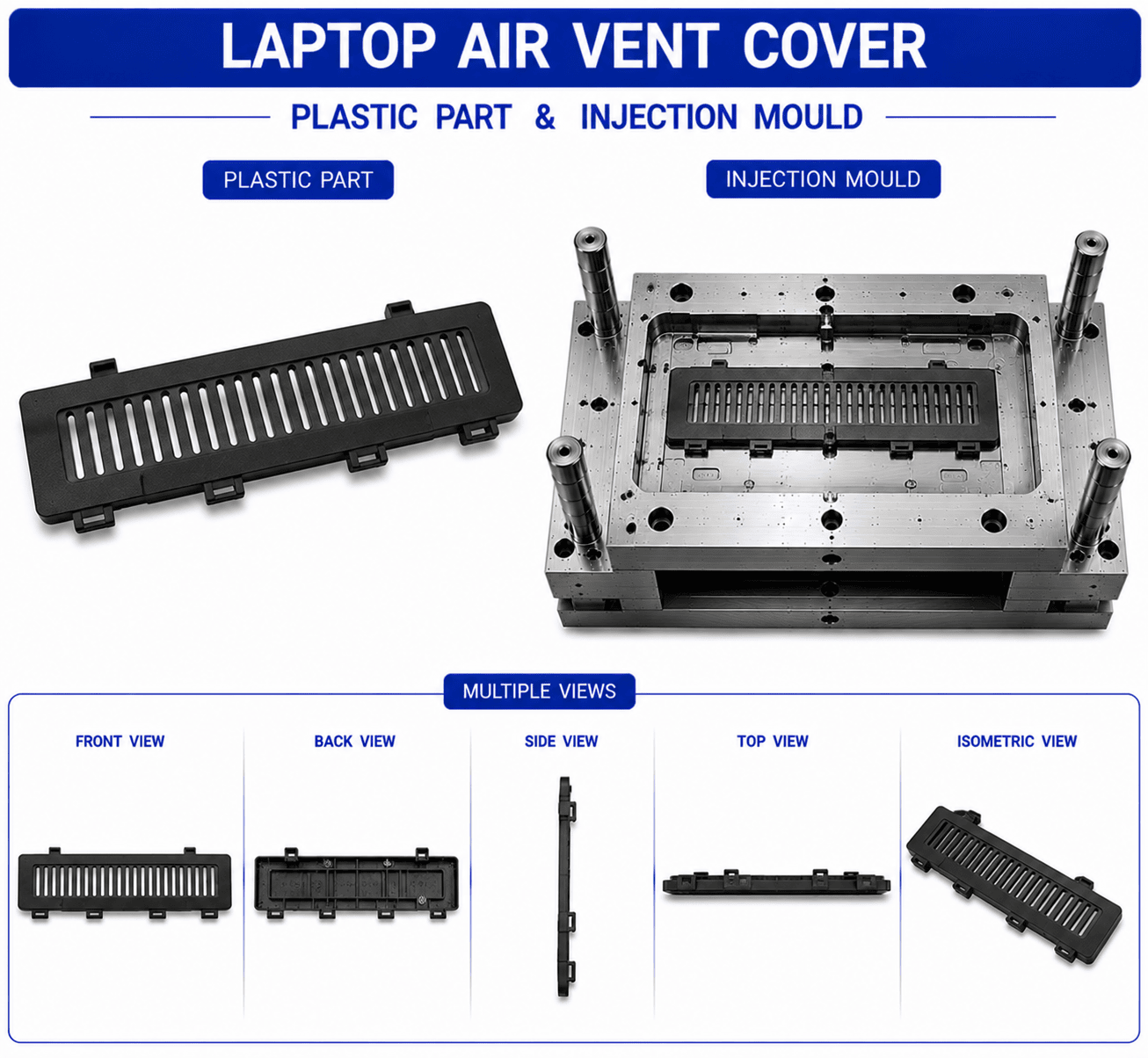
- Speaker Grills
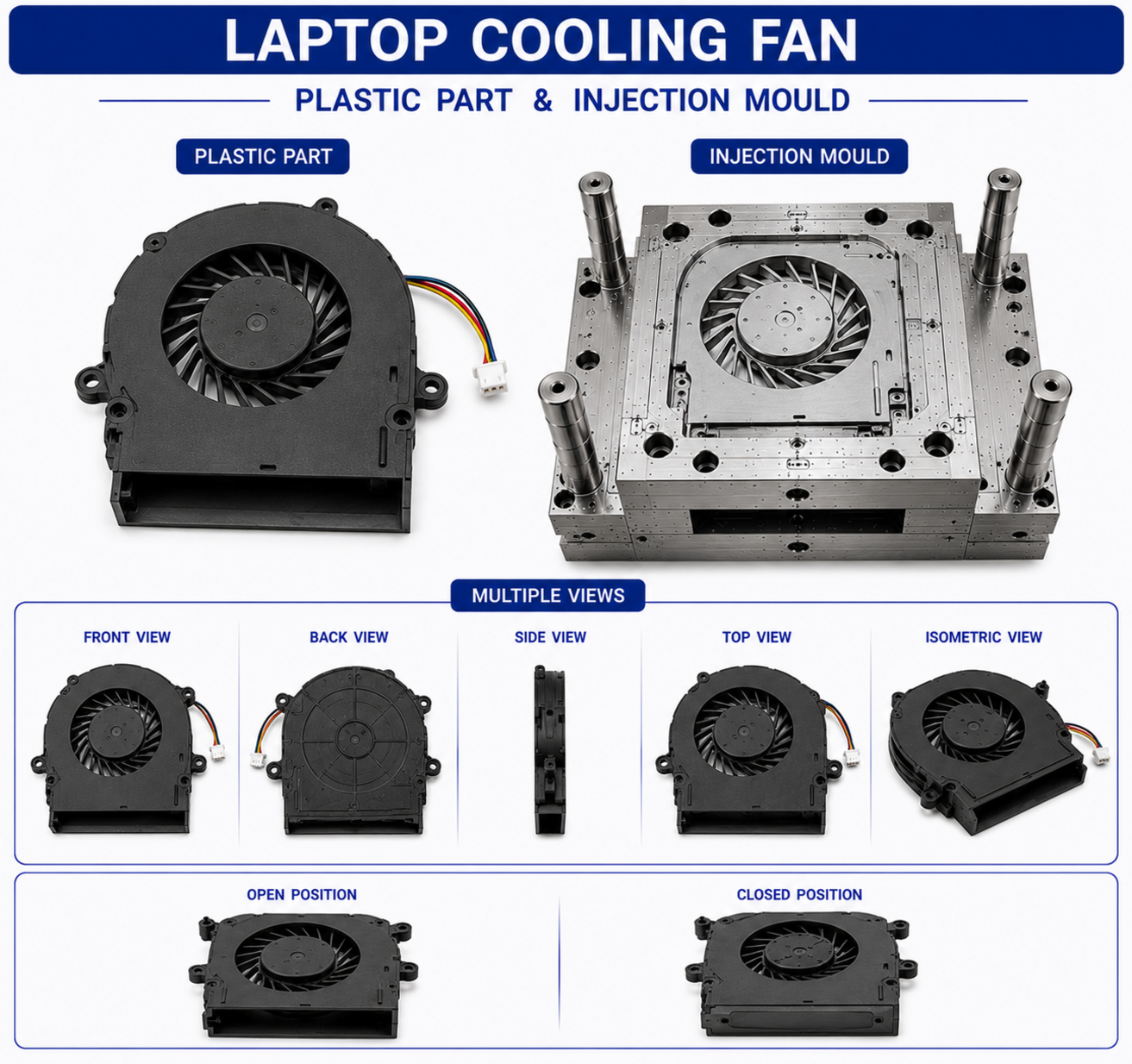
- Cooling Fan Housing
- Cooling Air Ducts
- Internal Plastic Frames
- SSD Cover
- RAM Cover
- Hard Drive Brackets
- USB Port Covers
- HDMI Port Covers
- Side Panels
- Plastic Mounting Brackets
- Display Hinge Components
- Cable Guides
- Adapter Housing
- Decorative Plastic Trim Parts
Industrial Applications of Laptop Plastic Parts and Moulds
Our laptop plastic parts are widely used across various industries where lightweight, durable, and precision-engineered components are essential.
Consumer Electronics
Manufacturing of laptops, notebooks, ultrabooks, Chromebooks, and hybrid devices.
Information Technology
Commercial laptops used in offices, businesses, and educational institutions.
Gaming Industry
High-strength plastic housings and cooling system components for gaming laptops.
Industrial Computing
Plastic enclosures for rugged industrial laptops used in manufacturing plants and field operations.
Medical Equipment
Portable medical laptops and diagnostic computing devices.
Defence & Aerospace
Rugged laptop housings designed for harsh environmental conditions.
OEM & ODM Manufacturing
Custom plastic components for domestic and international laptop brands.
Materials Used for Laptop Plastic Parts
We use premium engineering thermoplastics based on customer specifications and application requirements.
Common materials include:
- ABS (Acrylonitrile Butadiene Styrene)
- Polycarbonate (PC)
- PC + ABS Blend
- Nylon (PA6 / PA66)
- Glass-Filled Nylon
- Polypropylene (PP)
- PBT (Polybutylene Terephthalate)
- HIPS
- Flame-Retardant ABS
- Engineering Thermoplastics
These materials offer excellent strength, impact resistance, dimensional stability, electrical insulation, and heat resistance.
How are Laptop Plastic Parts Manufactured?
The manufacturing process involves several precision-controlled stages to ensure consistent quality and high production efficiency.
1. Product Design & Engineering
The process begins with 3D CAD modelling, where engineers create detailed designs of the laptop component while considering strength, weight, assembly, cooling, and manufacturability.
2. Material Selection
The appropriate engineering plastic is selected based on mechanical strength, heat resistance, flame retardancy, impact resistance, and aesthetic requirements.
3. Mould Flow Analysis
Simulation software is used to analyze material flow, cooling behavior, gate locations, shrinkage, and warpage before mould manufacturing begins.
4. Mould Manufacturing
Precision moulds are produced using advanced machining technologies such as CNC milling, EDM, wire cutting, grinding, polishing, and heat treatment to achieve high dimensional accuracy.
5. Injection Moulding Process
Plastic granules are heated until molten and injected into the mould cavity under controlled pressure. After cooling and solidification, the finished component is automatically ejected.
6. Secondary Processing
Depending on customer requirements, additional processes may include:
- Trimming
- Ultrasonic Welding
- Laser Marking
- Pad Printing
- Painting
- Texture Finishing
- Chrome Plating
- Assembly
7. Quality Inspection
Each component undergoes rigorous quality checks, including dimensional inspection, visual inspection, assembly testing, strength verification, and functional testing before packaging and dispatch.
How is a Laptop Plastic Injection Mould Made?
A precision mould is manufactured through the following engineering process:
Step 1 – Product Design
Engineers develop a detailed CAD model of the component.
Step 2 – Mould Design
Complete mould architecture is designed, including runner systems, cooling channels, ejector mechanisms, sliders, lifters, and venting.
Step 3 – Steel Selection
Premium tool steels such as P20, H13, S136, NAK80, or hardened alloy steels are selected depending on production volume and product requirements.
Step 4 – CNC Machining
High-speed CNC machines manufacture the cavity and core with micron-level precision.
Step 5 – EDM & Wire Cut Machining
Complex shapes, sharp corners, ribs, and intricate details are created using EDM and wire-cut technology.
Step 6 – Heat Treatment
The mould is hardened to increase wear resistance and extend operational life.
Step 7 – Grinding & Mirror Polishing
Critical mould surfaces are ground and polished to achieve superior surface finish and easy part ejection.
Step 8 – Trial Production
Sample components (T0, T1, and T2 trials) are produced and inspected before approving the mould for mass production.
Production Capacity on Injection Moulding Machines
Production capacity depends on machine tonnage, mould design, number of cavities, material type, and cycle time.
Machine TonnageSuitable ComponentsApproximate Daily Production*80–120 TonClips, Brackets, Covers8,000–18,000 Parts150–250 TonBattery Covers, Keyboard Frames5,000–12,000 Parts250–350 TonPalm Rest, Bottom Housing3,000–8,000 Parts350–500 TonLarge Laptop Enclosures2,000–6,000 PartsTypical Cycle Time: 20–45 seconds per shot.
*Actual output depends on part size, wall thickness, mould cavities, automation level, and machine efficiency.
Why Choose Renovator Appliances Ltd?
- Advanced CNC, EDM & Wire-Cut Tool Room
- Precision Injection Mould Manufacturing
- OEM & Custom Plastic Component Development
- High-Volume Production Capability
- Tight Dimensional Tolerances
- Experienced Design & Engineering Team
- Strict Quality Control Standards
- Modern Injection Moulding Facility
- On-Time Delivery
- Competitive Manufacturing Costs
Frequently Asked Questions (FAQ)
1. What are Laptop Plastic Parts and Moulds?
Laptop Plastic Parts are precision-engineered components used to manufacture laptop housings, bezels, keyboard frames, battery covers, and internal structural parts. Plastic moulds are precision steel tools used to produce these parts through injection moulding.
2. Which plastic materials are commonly used for laptop components?
Laptop components are typically manufactured using ABS, PC, PC+ABS, Nylon, PBT, HIPS, Glass-Filled Nylon, and Flame-Retardant engineering plastics due to their strength, durability, and heat resistance.
3. What manufacturing process is used for Laptop Plastic Parts?
The process includes product design, mould design, CNC machining, EDM, mould manufacturing, injection moulding, trimming, finishing, quality inspection, and final assembly to ensure precision and consistency.
4. What is the production capacity of injection moulding machines?
Depending on the machine size, mould cavities, and cycle time, production can range from approximately 2,000 to 18,000 plastic parts per day, making injection moulding ideal for both medium and high-volume manufacturing.
5. Does Renovator Appliances Ltd provide custom Laptop Plastic Parts and mould manufacturing?
Yes. Renovator Appliances Ltd offers complete OEM and custom manufacturing services, including product design assistance, precision mould development, injection moulding, secondary finishing, assembly, and mass production for laptop manufacturers and electronics companies.
10
products found
10 products found